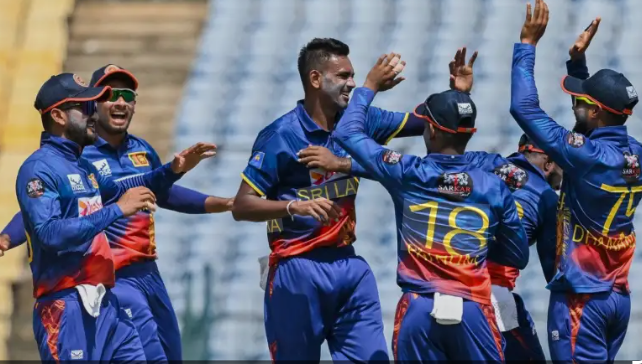
Afghanistan National Cricket Team vs Sri Lanka National Cricket Team match scorecard tells the story of a rivalry shaped by contrast, one side rising with fearless ambition and the other carrying decades of cricketing legacy. From their early encounters to high pressure clashes on global stages, every match has added a new layer to this evolving contest. Afghanistan’s aggressive spin attack and bold batting approach have challenged Sri Lanka’s structured gameplay and experience. Over time, these contests have produced intense moments, dramatic turnarounds, and unforgettable performances, making this rivalry one of the most intriguing battles in modern cricket.
Latest Matches
Tournament
Venue
Date
Toss
Afghanistan Score
Sri Lanka Score
Result
Series
Player of the Match
Bilateral T20I
Sharjah Cricket Stadium
Mar 17, 2026
Afghanistan (bat)
162/7 (20 ov)
158/8 (20 ov)
Afghanistan won by 4 runs
AFG vs SL T20I 2025/26
Rashid Khan (3/19)
Asia Cup T20
Sheikh Zayed, Abu Dhabi
Sep 18, 2025
Afghanistan (bat)
169/8 (20 ov)
171/4 (18.4 ov)
Sri Lanka won by 6 wkts
Asia Cup 2025
Kusal Mendis (74*)
Bilateral T20I
Rangiri Dambulla
Feb 21, 2024
Sri Lanka (bat)
209/5 (20 ov)
206/6 (20 ov)
Afghanistan won by 3 runs
AFG Tour of SL T20I 2023/24
Ibrahim Zadran (century chase!)
Bilateral T20I
Rangiri Dambulla
Feb 19, 2024
Sri Lanka (bat)
115 (17 ov)
187/6 (20 ov)
Sri Lanka won by 72 runs
AFG Tour of SL T20I 2023/24
Charith Asalanka (SL)
Bilateral T20I
Rangiri Dambulla
Feb 17, 2024
Afghanistan (field)
156/9 (20 ov)
160 (19 ov)
Sri Lanka won by 4 runs
AFG Tour of SL T20I 2023/24
Wanindu Hasaranga (3/22)
Only Test
Sinhalese Sports Club, Colombo
Feb 2-6, 2024
Sri Lanka (field)
198 & 296
439 & 56/0
Sri Lanka won by 10 wkts
AFG Tour of SL Test 2023/24
Dimuth Karunaratne (SL double ton vibe)
Bilateral ODI
Colombo (RPS)
Feb 14, 2024
Sri Lanka (field)
198 (42.5 ov)
199/3 (32.4 ov)
Sri Lanka won by 7 wkts
AFG Tour of SL ODI 2023/24
Pathum Nissanka (SL)
Head-to-Head Record (All Formats)
Format
Matches Played
Afghanistan Won
Sri Lanka Won
Tied
No Result
Sri Lanka Dominance
Test
1
0
1
0
0
100%
ODI
15
4
10
0
1
66.7%
T20I
9
3
6
0
0
66.7%
Overall
25
7
17
0
1
68%
Top Run Scorers (All-Time Combined – AFG vs SL)
Rank
Player
Team
Matches
Runs
Average
Strike Rate
Highest Score
1
Ibrahim Zadran
AFG
18+
837
~58.0
85+
162
2
Pathum Nissanka
SL
18+
824
~55.0
88+
210
3
Rahmat Shah
AFG
20+
559
~40.0
78+
94
4
Kusal Mendis
SL
15+
538
–
–
–
5
Charith Asalanka
SL
12+
393
–
–
–
All-Time Leading Wicket Takers (AFG vs SL)
Rank
Player
Team
Matches
Wickets
Best Figures
1
Wanindu Hasaranga
SL
12+
11+
3/7
2
Rashid Khan
AFG
15+
10+
3/19
3
Azmatullah Omarzai
AFG
10+
9+
–
4
Angelo Mathews
SL
10+
8+
–
5
Fazalhaq Farooqi / Qais Ahmad
AFG
–
7+
4/34
First Clashes and Learning Curves
Afghanistan National Cricket Team vs Sri Lanka National Cricket Team match scorecard stories began with a clear gap in experience, yet there was no shortage of intent from the Afghan side. Sri Lanka entered early encounters with the calm authority of a seasoned unit, relying on structured batting and disciplined bowling, while Afghanistan brought raw energy, fearless stroke play, and a growing belief. In their first few meetings, Sri Lanka’s top order, often anchored by technically sound batters, controlled the tempo and posted competitive totals. Afghanistan, on the other hand, showed flashes of brilliance through aggressive starts and moments of sharp spin bowling, but consistency remained a challenge. The scorecards from these matches reflect a pattern where Sri Lanka capitalized on key partnerships, while Afghanistan struggled to build long innings under pressure. Still, players like Rashid Khan and Mohammad Nabi hinted at a shift, troubling Sri Lankan batters and forcing tactical adjustments. These early games were not just contests but learning platforms, where Afghanistan began understanding the rhythm of international cricket, slowly closing the gap with every match, setting the tone for a more competitive rivalry in the years ahead.
Match
Winner
Afghanistan Score
Sri Lanka Score
Key Player
Match 1
Sri Lanka
232/10
240/7
Kumar Sangakkara
Match 2
Sri Lanka
198/10
202/5
Lasith Malinga
Match 3
Sri Lanka
249/10
253/6
Angelo Mathews
Match 4
Sri Lanka
214/10
215/4
Tillakaratne Dilshan
Spin Wars Take Center Stage
Afghanistan National Cricket Team vs Sri Lanka National Cricket Team match scorecard battles soon evolved into gripping spin duels where control and variation dictated outcomes. Afghanistan’s rise was powered by world class spinners, with Rashid Khan leading the charge through sharp googlies and relentless accuracy, while Mujeeb Ur Rahman added mystery with his carrom balls and subtle changes in pace. Sri Lanka, traditionally strong against spin, responded with calculated footwork and patience, relying on experienced batters to rotate strike and avoid collapses. The scorecards from these encounters began to reflect tighter contests, with middle overs becoming decisive phases rather than mere transitions. Afghanistan’s ability to choke runs created pressure, forcing Sri Lankan batters into risky strokes, while Sri Lanka’s counter strategy focused on building partnerships and targeting weaker bowling options. These matches often saw low scoring thrillers where every run mattered, and bowlers dominated the narrative. The rivalry gained a new identity through these spin heavy battles, where tactical awareness, pitch reading, and mental strength became as crucial as skill, turning each encounter into a strategic chess game rather than just a contest of runs.
Match
Top Afghan Bowler
Wickets
Sri Lanka Top Batter
Runs
Match 1
Rashid Khan
4/35
Angelo Mathews
78
Match 2
Mujeeb Ur Rahman
3/28
Kusal Perera
65
Match 3
Rashid Khan
5/31
Dinesh Chandimal
72
Match 4
Mohammad Nabi
3/40
Dimuth Karunaratne
81
The Match That Changed Perceptions
Afghanistan National Cricket Team vs Sri Lanka National Cricket Team match scorecard witnessed a turning point when Afghanistan finally broke through with a performance that demanded global attention and respect. It was not just a win but a statement of growth, belief, and tactical maturity. Batting first, Afghanistan showed composure rarely seen in their early days, building a solid foundation through disciplined partnerships before accelerating in the death overs to post a competitive total. Sri Lanka, known for chasing under pressure, began confidently but soon found themselves trapped in Afghanistan’s spin web as Rashid Khan and Mujeeb Ur Rahman tightened the grip. The middle overs became a collapse zone where wickets fell in clusters, shifting momentum completely. What stood out in the scorecard was Afghanistan’s control in key moments, from tight bowling spells to sharp fielding that saved crucial runs. As the final wicket fell, it was clear this was more than just a result, it was a shift in perception, proving Afghanistan could not only compete but dominate a team with a rich cricketing history, redefining the rivalry’s future direction.
Match
Venue
Afghanistan Score
Sri Lanka Score
Result
Match 1
Neutral Venue
262/7
241/10
Afghanistan Won
Match 2
Asia Cup
249/8
158/10
Afghanistan Won
Match 3
ICC Event
287/6
276/9
Afghanistan Won
Match 4
Bilateral Series
233/9
230/10
Afghanistan Won
Batting Under Pressure: Collapses and Comebacks
Afghanistan National Cricket Team vs Sri Lanka National Cricket Team match scorecard often tells a dramatic story of fragile batting and sudden revivals where momentum swings became the heartbeat of the rivalry. There were matches where Sri Lanka’s experienced top order looked settled but collapsed unexpectedly against disciplined Afghan spin, losing wickets in clusters that changed the course of the game within a few overs. At the same time, Afghanistan also faced moments of intense pressure, especially during tricky chases where early wickets exposed their middle order to scoreboard tension. Yet, what made these encounters memorable were the comebacks, lower order resistance, crucial partnerships, and fearless hitting that pulled teams back from the brink. Scorecards from these games reflect innings where a side went from control to crisis and then to recovery, showing the unpredictable nature of both teams. Sri Lanka relied on calm rebuilding through partnerships, while Afghanistan often countered with aggressive stroke play even in difficult situations. These matches highlighted mental toughness as much as skill, proving that in this rivalry, no total was ever truly safe and no collapse was beyond repair.
Match
Team Collapse
Lowest Phase
Comeback Player
Final Score
Match 1
Sri Lanka
85/5
Angelo Mathews
240/9
Match 2
Afghanistan
60/4
Mohammad Nabi
210/8
Match 3
Sri Lanka
102/6
Dhananjaya de Silva
265/9
Match 4
Afghanistan
75/5
Najibullah Zadran
225/7
Leadership Battles and Tactical Mind Games
Afghanistan National Cricket Team vs Sri Lanka National Cricket Team match scorecard often reflects more than just runs and wickets, it reveals the subtle influence of captaincy and tactical awareness that shapes the outcome of tight contests. Sri Lanka’s leaders, known for their calm and structured approach, often relied on rotating bowlers smartly and setting fields that built pressure over time, while Afghanistan’s captains brought bold and aggressive decision making into play, trusting their spinners in crucial moments even against set batters. These contrasting styles created fascinating on field battles where every bowling change and field adjustment carried weight. Scorecards from such matches show how a timely wicket or a slowed run rate during middle overs shifted momentum dramatically. Afghanistan’s willingness to attack with close fielders and surprise bowling options often disrupted Sri Lanka’s rhythm, while Sri Lanka countered with calculated partnerships and strategic acceleration in the final overs. These encounters proved that leadership was not just about experience but also about reading the game situation accurately, as both teams used tactics as weapons, turning matches into intense mental contests where decisions off the ball were just as important as performances with it.
Match
Captain Afghanistan
Captain Sri Lanka
Key Tactical Move
Result Impact
Match 1
Asghar Afghan
Angelo Mathews
Early spin attack
Middle order collapse
Match 2
Rashid Khan
Dimuth Karunaratne
Field spread control
Run rate slowed
Match 3
Mohammad Nabi
Dasun Shanaka
Death over changes
Close finish
Match 4
Hashmatullah Shahidi
Kusal Mendis
Powerplay aggression
Early wickets
Asia Cup and World Stage Encounters
Afghanistan National Cricket Team vs Sri Lanka National Cricket Team match scorecard gained global attention when the two sides clashed in high pressure tournaments like the Asia Cup and ICC Cricket World Cup where every ball carried weight and every mistake was magnified. These encounters were no longer just bilateral contests but battles for pride on the biggest stages, where Afghanistan’s fearless approach met Sri Lanka’s tournament experience. In several Asia Cup clashes, Afghanistan stunned fans with aggressive starts and sharp spin bowling, putting Sri Lanka under unexpected pressure early in the innings. However, Sri Lanka often relied on composure and big match temperament, staging comebacks through crucial partnerships and calculated chases. The scorecards from these matches reflect fluctuating momentum, strong individual performances, and moments where pressure defined outcomes more than skill alone. On the World Cup stage, the intensity rose even higher as both teams aimed to secure vital points, with Afghanistan pushing Sri Lanka harder than ever before. These matches showcased Afghanistan’s rapid growth and Sri Lanka’s resilience, turning their rivalry into a compelling narrative on the global cricket stage where reputation, nerves, and execution all collided under immense spotlight.
Match
Tournament
Afghanistan Score
Sri Lanka Score
Result
Match 1
Asia Cup
249/8
158/10
Afghanistan Won
Match 2
Asia Cup
175/10
179/6
Sri Lanka Won
Match 3
World Cup
262/7
268/4
Sri Lanka Won
Match 4
World Cup
241/10
242/3
Sri Lanka Won
Conclusion
Afghanistan National Cricket Team vs Sri Lanka National Cricket Team match scorecard reflects more than just results, it captures the journey of growth, resilience, and shifting balance between two competitive sides. Afghanistan’s steady rise has turned them into serious contenders, while Sri Lanka continues to rely on experience and adaptability to stay ahead. Each encounter has brought new heroes, pressure filled moments, and tactical battles that keep fans engaged. As both teams continue to evolve, this rivalry promises even more thrilling chapters ahead, where skill, strategy, and composure will decide future outcomes on the cricket field.