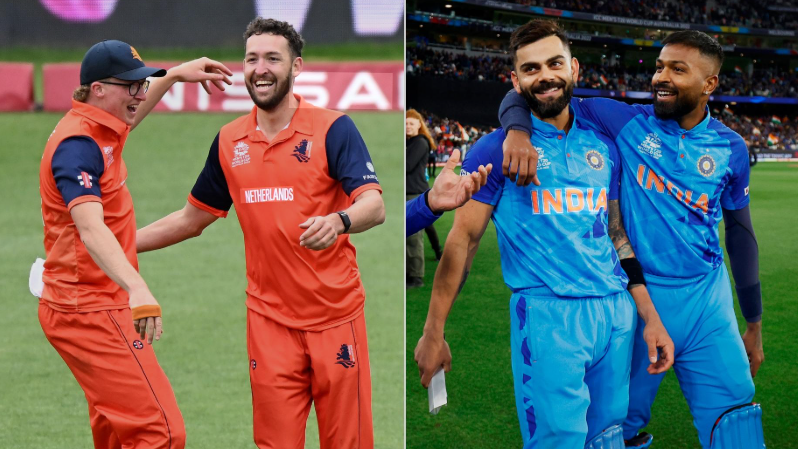
The India National Cricket Team vs Netherlands Cricket Team match scorecard reflects more than just numbers, it tells a story of contrast, growth, and determination across different eras of cricket. Whenever these two sides have met, the narrative has been shaped by India’s depth, experience, and expectation to dominate, while Netherlands have brought fearless energy and a desire to challenge the odds. From World Cup encounters to modern clashes, each match has carried moments where resistance met control. These games are not just about results but about how strategy, pressure, and individual brilliance unfold on the global stage through every scorecard.
Latest Matches
Date
Format
Venue
Winner
Scorecard
Result
18 Feb 2026
T20I
Ahmedabad
India
IND 193/6 – NED 176/7
India won by 17 runs
12 Nov 2023
ODI
Bengaluru
India
IND 410/4 – NED 250/10
India won by 160 runs
27 Oct 2022
T20I
Sydney
India
IND 179/2 – NED 123/9
India won by 56 runs
09 Mar 2011
ODI
Delhi
India
NED 189/10 – IND 191/5
India won by 5 wickets
12 Feb 2003
ODI
Paarl
India
IND 204/10 – NED 136/10
India won by 68 runs
Head-to-Head Summary Table
Format
Matches Played
India Wins
Netherlands Wins
No Result
ODI
3
3
0
0
T20I
2
2
0
0
Total
5
5
0
0
Best Player Analysis Table
Player Name
Team
Role
Impact Performance
Shivam Dube
India
All-rounder
66 runs and 2 wickets in 2026
Shreyas Iyer
India
Batsman
128 not out in 2023 World Cup
Yuvraj Singh
India
All-rounder
51 runs and 2 wickets in 2011
Bas de Leede
Netherlands
All-rounder
33 runs and 2 wickets in 2026
Tim de Leede
Netherlands
Bowler
4 wickets for 35 runs in 2003
Top Run Scorers All-Time
Batsman
Team
Matches
Total Runs
High Score
Shreyas Iyer
India
1
128
128*
Rohit Sharma
India
3
114
61
Virat Kohli
India
3
113
62*
KL Rahul
India
2
111
102
Yuvraj Singh
India
2
88
51*
Sachin Tendulkar
India
2
79
52
Daan van Bunge
Netherlands
1
62
62
2003 World Cup Clash That Introduced the Rivalry
The 2003 ICC World Cup meeting between India and Netherlands was the first real chapter of this uneven yet intriguing rivalry, where experience clearly outweighed ambition but not spirit. India entered the match with a settled lineup and tournament pressure, while Netherlands carried the fearless mindset of an associate nation eager to prove a point on the global stage. The scorecard reflected India’s cautious approach rather than outright domination, as their batting struggled to accelerate consistently against disciplined Dutch bowling. Netherlands, on the other hand, showed admirable control with the ball, keeping India to a modest total that hinted at a possible upset. However, when it came to chasing, India’s bowling attack, led by accuracy and patience, ensured that the resistance never turned into a real threat. This match was less about the result and more about the tone it set, India as the dominant force and Netherlands as a team that would fight hard despite limitations, laying the foundation of a rivalry defined by contrast yet mutual respect.
Team
Score
Top Batter
Best Bowler
Result
India
204/9
Rahul Dravid
Anil Kumble
Won
Netherlands
136
Klaas-Jan van Noortwijk
Tim de Leede
Lost
Overs
50
Partnership
50 Runs
Key Moment
Match Type
ODI
Venue
World Cup
India Controlled
Scorecard That Told a Story of Control and Resistance
The scorecard of this encounter quietly narrated a deeper story than the numbers suggested, revealing a contest shaped by control from India and resistance from Netherlands. India’s innings never truly exploded, as wickets fell at regular intervals, preventing momentum from building. Yet, small contributions across the batting order ensured a defendable total. Netherlands displayed discipline with tight lines and consistent pressure, forcing India into mistakes rather than being overpowered. When the chase began, the Dutch batters attempted to build partnerships, showing composure against a more experienced attack. However, India’s bowlers maintained relentless accuracy, slowly dismantling the innings without allowing any major breakthroughs. The contrast between India’s structured gameplay and Netherlands’ determined resistance was evident throughout. The match became a lesson in how control, patience, and experience can outweigh enthusiasm, even when the underdog refuses to back down easily, making the scorecard a reflection of effort as much as dominance.
Aspect
India
Netherlands
Key Factor
Outcome
Batting
Balanced
Struggling
Pressure
India Ahead
Bowling
Accurate
Disciplined
Control
India Dominant
Fielding
Sharp
Energetic
Effort
Competitive
Momentum
Steady
Interrupted
Wickets
India Win
The Long Gap Between Meetings and Changing Team Dynamics
After the 2003 encounter, the long gap between matches allowed both teams to evolve in completely different directions, further widening the gap in structure and resources. India continued to grow as a cricketing powerhouse, developing depth in both batting and bowling while gaining experience in high-pressure international tournaments. Netherlands, meanwhile, focused on building consistency and improving their exposure against stronger teams, often relying on passion and discipline rather than star power. This period highlighted the realities of global cricket, where full-member nations advanced rapidly while associate teams fought for opportunities to compete at the highest level. By the time the two sides met again, India had transformed into a more aggressive and confident unit, while Netherlands carried valuable lessons from years of gradual progress. The absence of regular contests did not diminish the rivalry but instead made each meeting more significant, as it showcased not just a match but the journey of two teams on very different paths in international cricket.
Phase
India Growth
Netherlands Growth
Difference
Impact
Experience
High
Moderate
Gap Wide
India Strong
Exposure
Frequent
Limited
Imbalance
Learning
Skill Level
Advanced
Developing
Clear Gap
Results
Confidence
High
Rising
Contrast
Competitive
2011 World Cup Encounter When Pressure Was One-Sided
The 2011 ICC World Cup clash brought the two teams together again, but this time under completely different circumstances, as India carried the weight of expectations on home soil. Every match for India was not just about winning but about convincing dominance, while Netherlands entered with the freedom of an underdog and the aim to challenge without fear. The scorecard once again showed India’s superiority, but the journey of the match revealed moments where Netherlands tested their opponents with disciplined bowling and determined batting. India’s chase, though successful, was not entirely smooth, highlighting that even under pressure, execution matters more than reputation. Netherlands managed to create brief moments of uncertainty, which added intrigue to an otherwise predictable contest. This match reinforced the narrative of one-sided pressure, where India had everything to lose and Netherlands had everything to gain, making the psychological battle as important as the cricket itself.
Team
Score
Top Performer
Bowling Impact
Result
Netherlands
189
Ryan ten Doeschate
Steady
Competitive
India
191/5
Sachin Tendulkar
Controlled
Won
Overs
50
Target
Chase
India Win
Venue
World Cup
Crowd
Pressure
High
Batting Depth vs Fighting Spirit A Tale Hidden in the Scorecard
The difference between batting depth and fighting spirit became evident once again in this clash, as India’s lineup provided stability while Netherlands relied heavily on individual resilience. India’s batting order, filled with experienced players, allowed them to recover from early setbacks and maintain control during the chase. Netherlands, in contrast, showed moments of brilliance through determined partnerships and calculated stroke play, but lacked the depth needed to sustain pressure over long periods. The scorecard reflected this imbalance, where India’s multiple contributors outweighed Netherlands’ isolated performances. Despite this, the fighting spirit of the Dutch side stood out, as they continued to challenge a stronger opponent without hesitation. This contrast added a layer of competitiveness to the rivalry, proving that while depth often decides results, determination can still shape the narrative of the match in meaningful ways.
Factor
India
Netherlands
Key Difference
Result Impact
Batting Depth
Strong
Limited
Stability
India Advantage
Partnerships
Consistent
Few
Momentum
India Control
Strike Rate
Balanced
Variable
Pressure
India Win
Spirit
Professional
Fighting
Energy
Competitive
Tactical Breakdown How India Controlled the Game Quietly
India’s ability to control the game without appearing overly aggressive was a defining feature of these encounters, showcasing their tactical maturity. The bowlers focused on maintaining tight lines and forcing errors rather than chasing wickets aggressively, while the field placements were designed to build pressure gradually. In batting, India avoided unnecessary risks, prioritizing partnerships and calculated scoring over explosive hitting. Netherlands, despite their efforts, struggled to break this control, often finding themselves reacting rather than dictating play. The quiet dominance displayed by India highlighted the importance of strategy and patience in cricket, where control can be more effective than aggression. This tactical approach ensured that even when the match seemed competitive on the surface, the outcome rarely drifted away from India’s grasp, reinforcing their position as the stronger and more composed side in this rivalry.
Tactic
India Approach
Netherlands Response
Effect
Result
Bowling
Tight Lines
Defensive
Pressure
India Lead
Batting
Calm Chase
Reactive
Control
India Win
Fielding
Strategic
Energetic
Stops Runs
Advantage
Captaincy
Smart
Adaptive
Balance
India Dominant
Conclusion
Looking back at the India National Cricket Team vs Netherlands Cricket Team match scorecard journey, it becomes clear that this rivalry is defined by more than outcomes. India’s consistent control highlights their strength as a cricketing powerhouse, while Netherlands’ fighting spirit adds character to every contest. Each encounter has revealed lessons in patience, execution, and belief, showing that even in one-sided rivalries, there are moments worth remembering. The scorecards capture not just wins and losses but the evolution of teams, the courage of underdogs, and the quiet dominance that shapes international cricket over time.