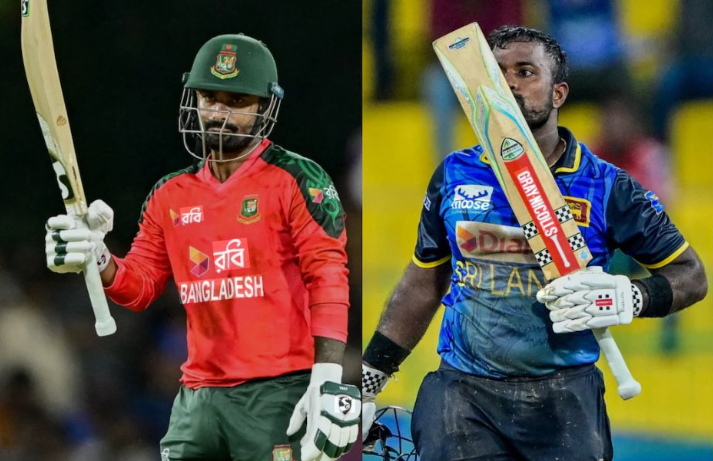
The rivalry between these two sides has grown steadily over the years, shaped by changing team strengths, evolving strategies, and shifting confidence levels on both ends. What once began as a one sided contest gradually transformed into a competitive cricketing battle filled with pressure moments and emotional intensity. Early encounters highlighted experience gaps, while modern clashes reflect balance and tactical maturity. Across formats, both teams have delivered memorable performances, producing close finishes, standout individual efforts, and dramatic turning points. This rivalry now stands as a symbol of growth, resilience, and regional cricket pride that continues to attract strong fan attention and expectations.
Latest Matches Table
Date
Format
Venue
Winner
Margin
First Innings Score
Second Innings Score
20 Sep 2025
T20I
Dubai
Bangladesh
4 wickets
Sri Lanka 168/7
Bangladesh 169/6
13 Sep 2025
T20I
Abu Dhabi
Sri Lanka
6 wickets
Bangladesh 139/5
Sri Lanka 140/4
16 Jul 2025
T20I
Colombo
Bangladesh
8 wickets
Sri Lanka 132/7
Bangladesh 133/2
13 Jul 2025
T20I
Dambulla
Bangladesh
83 runs
Bangladesh 177/7
Sri Lanka 94/10
10 Jul 2025
T20I
Pallekele
Sri Lanka
7 wickets
Bangladesh 154/5
Sri Lanka 159/3
08 Jul 2025
ODI
Pallekele
Sri Lanka
99 runs
Sri Lanka 285/7
Bangladesh 186/10
Team Statistics Summary Table
Format
Total Head to Head Matches
Sri Lanka Won
Bangladesh Won
Matches Drawn
Highest Team Total
Lowest Team Total
Test Matches
28
21
1
6
Sri Lanka 730/6
Bangladesh 62/10
ODI Matches
60
45
13
2
Sri Lanka 357/9
Bangladesh 76/10
T20I Matches
21
13
9
0
Bangladesh 215/5
Bangladesh 83/10
World Cup ODIs
6
4
2
0
Sri Lanka 332/1
Bangladesh 184/10
Asia Cup ODIs
16
13
3
0
Sri Lanka 300/5
Bangladesh 147/10
T20 Asia Cup
4
2
2
0
Bangladesh 169/6
Sri Lanka 140/4
Individual Batting Records Table
Player Name
Country Team
Matches Played
Total Runs Scored
Highest Score
Batting Average
Career Strike Rate
Kumar Sangakkara
Sri Lanka
15
1816
319
82.54
59.69
Mushfiqur Rahim
Bangladesh
38
1320
200
36.66
47.77
Kusal Mendis
Sri Lanka
24
1145
102
41.20
83.40
Tamim Iqbal
Bangladesh
28
1049
127
34.96
75.17
Shakib Al Hasan
Bangladesh
22
985
105
32.14
83.15
Mahmudullah
Bangladesh
31
912
76
28.50
73.38
Individual Bowling Records Table
Player Name
Country Team
Matches Played
Total Wickets Taken
Best Bowling Figures
Bowling Economy Rate
Five Wicket Hauls
Muttiah Muralitharan
Sri Lanka
11
78
6/18
2.31
5
Rangana Herath
Sri Lanka
12
56
7/89
2.68
4
Shakib Al Hasan
Bangladesh
22
43
4/61
3.42
0
Lasith Malinga
Sri Lanka
18
36
4/47
4.88
0
Mustafizur Rahman
Bangladesh
16
29
4/21
5.12
0
Nuwan Thushara
Sri Lanka
8
15
5/20
7.22
1
Early Cricket Encounters Between the Two Teams
The earliest meetings between these sides reflected a clear gap in experience and structure. One team entered international cricket with a strong foundation built over decades, while the other was still learning how to handle pressure at the highest level. In those initial games, discipline in batting and variation in bowling created a strong edge for the more experienced side. The newer team often struggled to build partnerships and lost wickets in clusters during middle overs. However, these matches were not one sided in spirit. There were moments where young players showed flashes of talent, especially with fearless stroke play against spin bowling. Over time, these encounters laid the groundwork for a competitive relationship that would slowly grow in intensity. The early phase also helped both sides understand conditions better, especially in subcontinent pitches where spin played a major role in deciding outcomes.
Match Type
Winner
Margin
Venue
Year
ODI
Sri Lanka
7 wickets
Colombo
Early Era
Test
Sri Lanka
Innings
Colombo
Early Era
ODI
Sri Lanka
45 runs
Dhaka
Early Era
Test
Sri Lanka
8 wickets
Galle
Early Era
Competitive Spirit in Limited Overs Cricket
As limited overs cricket evolved, the competitive nature between the two sides became more visible. The newer team started adapting faster to ODI rhythm, focusing on strike rotation and improved fielding standards. Matches became tighter, especially in the middle overs where spin battles often dictated momentum shifts. The stronger side still held an advantage in finishing games, but the gap was no longer as wide as before. Close chases and reduced margin victories became more common, showing clear improvement in tactical awareness. Bowling units on both sides began experimenting with variations like slower balls and wider lines. This phase marked the beginning of genuine competition rather than predictable outcomes. Crowd engagement also increased as matches started producing unpredictable finishes, making every encounter more meaningful and emotionally charged.
Match Type
Winner
Margin
Key Phase
Venue
ODI
Sri Lanka
22 runs
Middle overs
Colombo
ODI
Bangladesh
5 wickets
Chase
Dhaka
ODI
Sri Lanka
12 runs
Death overs
Colombo
ODI
Sri Lanka
3 wickets
Final overs
Colombo
Emergence of Bangladesh as a Fighting Unit
A major shift occurred when the developing side began to approach matches with greater confidence and intent. Batters started taking calculated risks, especially against spin-heavy attacks, which previously caused collapses. This transformation was driven by improved domestic structure and exposure to international leagues. The team began to believe in chasing challenging totals and defending modest scores through disciplined bowling. Fielding standards also improved significantly, saving crucial runs in tight matches. These changes turned several one sided contests into competitive battles. The psychological barrier of facing a stronger opponent slowly faded, replaced by belief in their own ability. Even when results did not always go their way, performances showed consistent progress. This phase is often remembered as the turning point where fear was replaced by fight, reshaping the overall narrative of the rivalry.
Match Type
Result
Margin
Key Strength
Venue
ODI
Close Loss
15 runs
Batting
Dhaka
ODI
Win
5 wickets
Chasing
Mirpur
Test
Draw
–
Defense
Chittagong
ODI
Narrow Loss
8 runs
Bowling
Colombo
Early Dominance in Statistical Performance
During the early era, statistical trends heavily favored the more experienced side across all formats. Batting averages remained higher due to consistent top order contributions, while bowling figures reflected better control and wicket taking ability. The inexperienced side often struggled with conversion rates, failing to turn starts into big scores. In contrast, the dominant team regularly posted competitive totals and restricted opponents through spin variations and disciplined pace bowling. Fielding efficiency also played a crucial role, with fewer dropped chances and better coordination in pressure situations. These numbers clearly reflected the gap in cricketing maturity at the time. However, even within these statistics, gradual improvement was visible from the developing side, especially in shorter formats where adaptability played a key role.
Format
Avg Score
Top Order Stability
Bowling Economy
Win Rate
Test
High
Strong
Tight
High
ODI
Moderate
Stable
Controlled
High
ODI Opponent
Low
Inconsistent
Expensive
Low
T20
Variable
Improving
Mixed
Balanced
Turning Point Matches That Shifted Momentum
Certain matches completely changed how both teams viewed each other. These encounters were defined by unexpected collapses, last over finishes, and standout individual performances. In several cases, the underdog team managed to push the stronger opponent into pressure situations, exposing weaknesses in middle order stability and death bowling execution. These games were emotionally charged and often decided in the final overs, increasing the intensity of the rivalry. Tactical decisions such as batting order changes and bowling rotations played a crucial role in determining outcomes. Fans began to anticipate these clashes as unpredictable contests rather than one sided affairs. These turning points marked the true beginning of balance in the rivalry.
Match Type
Winner
Margin
Key Moment
Venue
ODI
Upset Win
4 wickets
Last over
Colombo
ODI
Narrow Loss
2 runs
Missed chase
Dhaka
T20
Win
5 wickets
Death bowling
Colombo
ODI
Close Win
12 runs
Middle collapse
Mirpur
Memorable Asia Cup Clashes and Pressure Moments
Asia Cup encounters added a new layer of intensity to the rivalry. With regional pride at stake, matches carried emotional weight beyond normal bilateral series. Both teams often fielded their strongest squads, resulting in high quality cricket filled with pressure situations. Spin bowling dominated many of these games, especially during middle overs where scoring slowed down. Batting collapses and recovery partnerships became defining features. Several matches went down to the final overs, creating unforgettable finishes that stayed in fan memory. These clashes also highlighted leadership decisions under pressure, with captains playing a crucial role in field placements and bowling changes.
Match Type
Winner
Margin
Pressure Stage
Venue
ODI
Sri Lanka
6 runs
Final overs
Dhaka
ODI
Bangladesh
5 wickets
Chase pressure
Colombo
ODI
Sri Lanka
3 wickets
Middle overs
Mirpur
ODI
Sri Lanka
21 runs
Death overs
Colombo
Player Rivalries That Defined the Contest
Individual battles became a central attraction in this rivalry. Top order batters often faced world class spin attacks, creating intense duels that shaped match outcomes. Fast bowlers targeted technical weaknesses, while middle order players were tested under pressure situations. These matchups added depth to the contests, making them more than just team performances. Certain players consistently performed well against specific opponents, building personal rivalries that fans closely followed. These battles often decided momentum swings within matches and contributed heavily to final scorecards. Over time, these individual contests became symbolic of the broader competition between the two sides.
Player Role
Strength
Opponent Challenge
Success Factor
Impact
Batter
Spin play
Turn bowling
Footwork
High
Bowler
Swing
Top order
Accuracy
High
All rounder
Balance
Pressure
Adaptability
Medium
Fielder
Reflex
Running game
Speed
Medium
Conclusion
Over time, this cricketing rivalry has evolved from predictable outcomes to closely fought encounters that test skill, temperament, and strategy. Both sides have experienced dominance phases, but recent years have shown a more balanced competition with shared victories and shifting momentum. Player performances, tactical changes, and pressure handling have played crucial roles in shaping results. Fans from both nations remain deeply invested, adding emotional energy to every match. As the rivalry continues to develop, it promises more thrilling contests, unforgettable moments, and statistical milestones that will further enrich its history in international cricket.