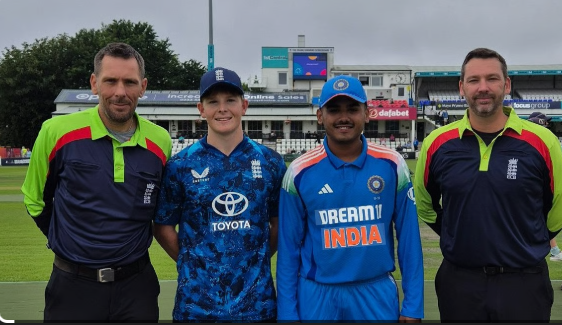
England Under-19 Cricket Team Vs India National Under-19 Cricket Team Matches
Table of Contents
The rivalry between the England Under-19 Cricket Team and the India National Under-19 Cricket Team has grown into one of the most compelling contests in youth cricket. What began as occasional encounters in ICC tournaments soon evolved into a battle of skill, temperament, and cricketing philosophy. These matches have consistently showcased emerging talent, intense pressure situations, and tactical depth. From early dominance to closely fought thrillers, every scorecard tells a deeper story of growth and competition. This rivalry has not only entertained fans but also played a crucial role in shaping the future stars of international cricket.
Latest Matches
Tournament
Venue
Date
Toss
India Score
England Score
Result
Series
Player of the Match
U19 World Cup Final
Harare
Feb 6, 2026
India (bat)
411/9 (50 ov)
311 (40.2 ov)
India won by 100 runs
World Cup
V. Sooryavanshi (IND)
Bilateral Youth Test
Chelmsford
Jul 20, 2025
England (bat)
279 & 290/6
309 & 324/5d
Match Drawn
Test Series
Thomas Rew (ENG)
Bilateral Youth Test
Beckenham
Jul 12, 2025
India (bat)
540 & 248
439 & 270/7
Match Drawn
Test Series
Ayush Mhatre (IND)
Bilateral Youth ODI
Worcester
Jul 7, 2025
India (bat)
210/9 (50 ov)
211/3 (31.1 ov)
England won by 7 wkts
ODI Series
Caleb Falconer (ENG)
Bilateral Youth ODI
Worcester
Jul 5, 2025
India (bat)
363/9 (50 ov)
308 (45.3 ov)
India won by 55 runs
ODI Series
V. Sooryavanshi (IND)
Bilateral Youth ODI
Northampton
Jul 2, 2025
England (field)
274/6 (34.3 ov)
268/6 (40 ov)
India won by 4 wkts
ODI Series
Ayush Mhatre (IND)
Bilateral Youth ODI
Northampton
Jun 30, 2025
India (bat)
290 (49 ov)
291/9 (49.3 ov)
England won by 1 wkt
ODI Series
Thomas Rew (ENG)
All-Time Head-to-Head Record
Format
Total Matches
India Wins
England Wins
Ties/No Result
Youth ODIs
55
41
13
1
Youth Tests
35
10
4
21
All-Time Batting Leaders
Player
Team
Matches
Runs
Highest Score
Average
Vaibhav Sooryavanshi
IND U19
25
355
175
75.85
Vijay Zol
IND U19
36
1,203
173
42.96
Yashasvi Jaiswal
IND U19
27
986
114*
44.81
Thomas Rew
ENG U19
5
280
131
93.33
Rocky Flintoff
ENG U19
5
222
107
44.40
All-Time Bowling Leaders
Player
Team
Wickets
Matches
Best Bowling
Economy
Rahul Chahar
IND U19
16
7
4/33
4.12
Anukul Roy
IND U19
16
7
5/14
3.84
Yo Mahesh
IND U19
16
6
4/30
4.25
Alex French
ENG U19
8
3
4/71
5.92
Kanishk Chouhan
IND U19
8
5
3/20
4.33
When Young Lions First Crossed Paths on the Global Stage
The first encounters between the England Under-19 Cricket Team and the India National Under-19 Cricket Team carried a quiet intensity, long before the rivalry gained global attention. These matches, often played in ICC Under-19 World Cups, were more than just youth fixtures; they were a glimpse into the future of international cricket. India entered these contests with a well-structured domestic system, producing technically sound batters and crafty spinners, while England relied on raw pace, discipline, and evolving strategies. Early scorecards reflected a contest of contrasting styles, with India frequently building steady innings and England searching for breakthroughs through seam movement. The conditions also played a key role, as subcontinental pitches often favored India’s spin attack, while England found more comfort in seaming tracks. Despite the gap in consistency, England showed flashes of brilliance, hinting at a rivalry that would grow stronger over time. These initial clashes laid the foundation for a competitive narrative where young talents began to feel the pressure of representing cricketing giants.
Year
Tournament
Venue
Result
Key Performer
1998
ICC U-19 World Cup
South Africa
India won
Strong batting display
2000
ICC U-19 World Cup
Sri Lanka
India won
Dominant spin attack
2002
ICC U-19 World Cup
New Zealand
India won
Balanced team effort
2006
ICC U-19 World Cup
Sri Lanka
England won
Fast bowling impact
2010
ICC U-19 World Cup
New Zealand
India won
All-round performance
Early Matches That Revealed the Gap in Structure and Depth
As the rivalry began to take shape, the early encounters between the England Under-19 Cricket Team and the India National Under-19 Cricket Team clearly highlighted a difference in structure, preparation, and depth. India’s Under-19 system was already producing players who looked tactically aware and technically polished, thanks to a strong domestic circuit and exposure to competitive age-group tournaments. Their batting units showed patience, often building innings in phases, while their bowlers, especially spinners, controlled the tempo with discipline. England, on the other hand, had moments of aggression and raw pace, but lacked the same level of consistency across departments. Scorecards from this period often told a similar story, where England started brightly but struggled to maintain pressure through the middle overs. India’s ability to rotate strike, build partnerships, and execute plans under pressure gave them a clear edge. However, England’s flashes of brilliance hinted at untapped potential, suggesting that once their system matured, the rivalry would become far more competitive and evenly balanced.
Year
Tournament
Venue
Result
Key Insight
2002
ICC U-19 World Cup
New Zealand
India won
Strong middle-order stability
2004
Bilateral Series
England
India won
Better adaptability by India
2006
ICC U-19 World Cup
Sri Lanka
England won
Pace attack breakthrough
2008
ICC U-19 World Cup
Malaysia
India won
Dominant all-round display
2012
ICC U-19 World Cup
Australia
India won
Superior depth and composure
Rising Confidence and England’s First Strong Statement Wins
As the rivalry matured, a noticeable shift began to emerge with England Under-19 growing in confidence and belief. No longer content with brief flashes of brilliance, they started producing complete performances that challenged India’s long-standing dominance. These matches revealed a more structured England setup, where fast bowlers operated in disciplined spells and batters showed greater composure under pressure. England’s ability to strike early with the new ball often disrupted India’s traditionally strong top order, forcing them into unfamiliar situations. At the same time, England’s middle order began to contribute with match-defining partnerships, turning close contests into statement victories. Scorecards from this phase reflected tighter margins and a growing balance between the two sides. India still had depth and skill, but England’s improved planning, fitness, and tactical awareness made them formidable opponents. These wins were not just results; they were declarations that the rivalry had evolved into a genuine contest, with England proving they could match and even outplay one of the strongest youth teams in the world.
Year
Tournament
Venue
Result
Key Highlight
2006
ICC U-19 World Cup
Sri Lanka
England won
Dominant pace attack
2010
Bilateral Series
England
England won
Strong team performance
2014
Tri-Series
Australia
England won
Balanced batting effort
2016
ICC U-19 World Cup
Bangladesh
England won
Clinical chase under pressure
2017
Bilateral Series
India
England won
Improved tactical execution
India’s Golden Generation and Dominance in Key Tournaments
There came a phase in this rivalry when the India National Under-19 Cricket Team looked almost untouchable, powered by what many called a golden generation of young talent. These were not just promising players; they were future international stars who carried maturity far beyond their age. India’s approach became sharper, their batting more fearless, and their bowling attacks more versatile. In major tournaments, especially ICC Under-19 World Cups, India displayed an ability to control matches from start to finish. Strong opening partnerships, composed middle-order innings, and disciplined bowling units meant that scorecards often tilted heavily in their favor. England Under-19, despite their growing confidence, found it difficult to break through India’s rhythm during this period. What stood out most was India’s composure under pressure situations, whether defending totals or chasing targets in knockout games. These dominant performances not only strengthened India’s hold over the rivalry but also set new benchmarks in youth cricket, proving that a well-built system could consistently produce match-winners on the global stage.
Year
Tournament
Venue
Result
Key Highlight
2008
ICC U-19 World Cup
Malaysia
India won
Dominant all-round display
2012
ICC U-19 World Cup
Australia
India won
Strong batting depth
2014
Tri-Series
Australia
India won
Consistent performances
2018
ICC U-19 World Cup
New Zealand
India won
Clinical dominance
2022
ICC U-19 World Cup
West Indies
India won
Balanced team effort
World Cup Battles That Turned Into High-Pressure Classics
When it came to ICC Under-19 World Cups, matches between the England Under-19 Cricket Team and the India National Under-19 Cricket Team often transformed into gripping, high-pressure classics. These were not just games; they were moments where young cricketers experienced the weight of expectations, national pride, and knockout tension for the first time. India, known for handling pressure with composure, often relied on calculated chases and disciplined bowling to control crucial moments. England, on the other hand, brought fearless intent, attacking fields, and aggressive stroke play that pushed India out of their comfort zone. Scorecards from these encounters frequently reflected tight finishes, where a single partnership or a crucial spell changed the course of the match. Whether it was a semifinal clash or a league stage battle with knockout implications, both teams showed remarkable resilience. These contests helped shape mental toughness in future stars, proving that success at the highest level begins with learning to thrive under pressure in youth cricket’s biggest tournaments.
Year
Stage
Venue
Result
Key Moment
1998
Quarterfinal
South Africa
India won
Calm chase under pressure
2006
League Match
Sri Lanka
England won
Pace attack dominance
2012
Final
Australia
India won
Strong batting performance
2016
Final
Bangladesh
India won
Clinical bowling effort
2018
Semifinal
New Zealand
India won
All-round team display
Tactical Battles Between Spin Mastery and Seam Precision
One of the most fascinating aspects of matches between the England Under-19 Cricket Team and the India National Under-19 Cricket Team has been the clear tactical contrast between spin mastery and seam precision. India traditionally built their strategy around quality spinners who could control the middle overs, slow down scoring, and force mistakes through subtle variations. Their young batters were equally adept at playing spin, using footwork and strike rotation to dominate conditions, especially on subcontinental pitches. England, in contrast, leaned heavily on their seam attack, focusing on early breakthroughs with swing and bounce. Their pacers often targeted the top order with aggressive lines, trying to expose any technical weaknesses. Scorecards from these contests often reflected this battle, with matches swinging depending on which strategy gained the upper hand. On turning tracks, India usually dictated terms, while in seaming conditions, England found themselves in control. This tactical tug of war added depth to the rivalry, making every encounter a test of adaptability, planning, and execution under varying conditions.
Year
Condition
Dominant Strategy
Result
Key Impact
2008
Spin-friendly
India spin attack
India won
Middle overs control
2010
Seaming pitch
England pace attack
England won
Early wickets
2014
Balanced
Mixed approach
India won
Tactical flexibility
2016
Spin-friendly
India dominance
India won
Pressure through spin
2018
Seaming pitch
England pace
England won
Top-order collapse
Matches Where Momentum Swung Dramatically
Some of the most unforgettable encounters between the England Under-19 Cricket Team and the India National Under-19 Cricket Team have been defined by dramatic shifts in momentum that kept fans and players on edge. These were matches where control changed hands multiple times, turning what seemed like comfortable situations into nerve-wracking finishes. India often built strong platforms with steady partnerships, only for England’s pace attack to trigger sudden collapses. On other occasions, England looked in command with aggressive starts, but India’s spinners pulled things back with tight spells and crucial breakthroughs. Scorecards from these games tell stories of collapses, recoveries, and last-over tension, where even a single over could completely alter the outcome. Fielding efforts, run-outs, and pressure-induced errors also played a major role in shifting momentum. These matches highlighted the unpredictable nature of youth cricket, where emotions run high and confidence can change in an instant. Ultimately, such contests added excitement to the rivalry, proving that no total was ever truly safe and no situation ever completely lost.
Year
Match Situation
Turning Point
Result
Key Highlight
2006
England strong start
India middle-order fightback
India won
Crucial partnership
2010
India dominant early
England pace comeback
England won
Quick wickets burst
2014
Balanced contest
Late collapse by England
India won
Spin pressure
2016
England chasing well
India bowling turnaround
India won
Tight death overs
2018
India struggling
Lower-order recovery
India won
Match-saving innings
Future Stars Who Announced Themselves on This Stage
The rivalry between the England Under-19 Cricket Team and the India National Under-19 Cricket Team has often served as a launchpad for future international stars. These matches were not just about team results; they were stages where young players announced themselves with performances that hinted at greatness. For India, players showed remarkable composure, crafting innings under pressure and delivering match-winning spells that caught the attention of selectors. England’s young talents, meanwhile, impressed with fearless batting and sharp pace bowling, proving their ability to compete at the highest level. Many of these players carried the confidence gained from these encounters into senior cricket, where they went on to represent their national teams with distinction. Scorecards from these clashes often feature names that later became household figures, underlining the importance of this rivalry in shaping careers. It was here that raw talent met opportunity, and those who rose to the occasion laid the foundation for successful international journeys, making these matches a true proving ground for the next generation of cricketing stars.
Year
Player
Team
Performance
Future Impact
2008
Virat Kohli
India
Match-winning innings
Became senior team captain
2010
Joe Root
England
Consistent batting
Key international player
2012
Unmukt Chand
India
Final-winning knock
Emerging leader
2016
Sam Curran
England
All-round performance
International all-rounder
2018
Shubman Gill
India
Dominant batting
Top-order mainstay
Conclusion
Over the years, matches between the England Under-19 Cricket Team and the India National Under-19 Cricket Team have delivered excitement, drama, and valuable lessons in competitive cricket. The rivalry reflects more than just wins and losses; it highlights the evolution of young players under pressure and the importance of strong development systems. Each encounter has contributed to building confidence, resilience, and character among future international cricketers. As both teams continue to produce world-class talent, this rivalry remains a vital platform where tomorrow’s stars are tested, refined, and prepared for the global stage.