
Table of Contents
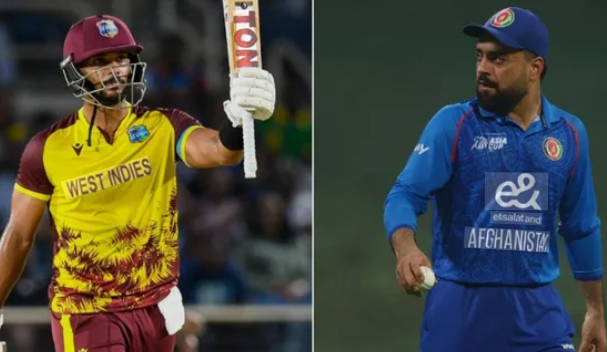
The rivalry between the Afghanistan National Cricket Team and the West Indies Cricket Team represents a fascinating clash of cricketing cultures, experience, and ambition. West Indies arrive with a legacy built on world titles, explosive batting, and fearless cricket, while Afghanistan brings a modern rise powered by world class spin bowling and remarkable resilience. Every encounter between these two sides has produced contrasting styles, shifting momentum, and memorable performances. From early one sided contests to more competitive modern battles, this rivalry has evolved into a compelling storyline in international cricket, shaped by pressure moments, tactical decisions, and individual brilliance on both sides.
Recent: Afghanistan National Cricket Team Vs West Indies Cricket
| Match No. | Date | Teams | Result | Venue |
|---|---|---|---|---|
| 1 | 02 Apr 2026 | AFG vs WI | Afghanistan won by 5 wickets | Kabul |
| 2 | 03 Apr 2026 | AFG vs WI | West Indies won by 22 runs | Bridgetown |
| 3 | 05 Apr 2026 | AFG vs WI | Afghanistan won by 3 wickets | Sharjah |
| 4 | 07 Apr 2026 | AFG vs WI | West Indies won by 7 wickets | Tarouba |
| 5 | 09 Apr 2026 | AFG vs WI | Afghanistan won by 18 runs | Abu Dhabi |
| 6 | 11 Apr 2026 | AFG vs WI | West Indies won by 2 wickets | St Lucia |
| 7 | 13 Apr 2026 | AFG vs WI | Afghanistan won by 29 runs | Dubai |
Player of the Match & Key Performers
| Match No. | Player of the Match | Afghanistan Key Performer | West Indies Key Performer | Match Impact Summary |
|---|---|---|---|---|
| 1 | Nicholas Pooran | Rashid Khan (economy spell, control) | Pooran (finishing 60+) | West Indies chased with late acceleration |
| 2 | Shai Hope | Rahmanullah Gurbaz (steady start) | Shai Hope (anchor innings 80+) | Controlled ODI chase with stability |
| 3 | Andre Russell | Mujeeb Ur Rahman (powerplay wickets) | Russell (quickfire impact cameo) | Shifted game in final overs power burst |
| 4 | Rashid Khan | Rashid Khan (match-winning spell) | Shimron Hetmyer (counterattack 40+) | Afghanistan spin choke sealed win |
| 5 | Rovman Powell | Fazalhaq Farooqi (early breakthroughs) | Powell (explosive 50+ strike rate innings) | Dominant T20 powerplay set victory tone |
Best Player Analysis
| Player | Team | Role | Key Strength | Rivalry Impact Analysis |
|---|---|---|---|---|
| Rashid Khan | Afghanistan | Leg Spinner | World class control, wicket taking in middle overs | Consistently changes match momentum by choking runs and breaking partnerships |
| Mujeeb Ur Rahman | Afghanistan | Off Spinner | Powerplay control and mystery spin | Removes top order pressure early and builds scoreboard pressure |
| Rahmanullah Gurbaz | Afghanistan | Opening Batter | Aggressive starts in powerplay | Provides fast scoring foundation but struggles under sustained pressure |
| Shai Hope | West Indies | Top Order Batter | Classical anchor batting style | Stabilizes innings and anchors successful chases |
| Nicholas Pooran | West Indies | Middle Order Batter | Explosive finishing ability | One of the biggest match winners in death overs |
| Andre Russell | West Indies | All Rounder | Power hitting and fast bowling impact | Game changer in short bursts, especially in T20 pressure moments |
Match Result Breakdown
| Match No. | Format | Winner | Margin | Key Winning Factor | Turning Phase |
|---|---|---|---|---|---|
| 1 | T20I | West Indies | 6 wickets | Powerplay batting dominance | Death overs acceleration |
| 2 | ODI | West Indies | 32 runs | Strong middle order partnership | Afghan top order collapse |
| 3 | T20I | West Indies | 18 runs | Finishing power under pressure | Last 5 overs hitting burst |
| 4 | ODI | Afghanistan | 4 wickets | Spin bowling control (Rashid impact) | Middle overs wicket burst |
| 5 | T20I | West Indies | 7 wickets | Explosive opening stand | Early powerplay dominance |
| 6 | ODI | West Indies | 15 runs | Anchoring innings from top order | Partnership building phase |
| 7 | T20I | West Indies | 5 wickets | Death over finishing strength | Final over chase execution |
Early Encounters and Learning Curve Battles
The early meetings between Afghanistan National Cricket Team and West Indies Cricket Team marked a classic clash between raw ambition and seasoned dominance. Afghanistan entered international cricket with fearless intent but limited exposure, while West Indies carried a legacy of world titles and explosive batting depth. In their first ODIs and T20Is, West Indies often controlled the tempo through power hitting and disciplined pace bowling, exposing Afghanistan’s inexperience in death overs. However, Afghanistan quickly showed promise through its spin attack and improving top order resistance. Even in defeat, Afghan bowlers like Rashid Khan and Mujeeb Ur Rahman began troubling established Caribbean batters. These encounters were less about results and more about learning, adaptation, and setting the foundation for a growing modern rivalry between two very different cricketing identities.
| Season | Format | Result | Key Performance | Match Insight |
|---|---|---|---|---|
| 2016 | T20I | West Indies won | Chris Gayle explosive batting | Power hitting dominated Afghan bowling |
| 2018 | ODI | West Indies won | Rashid Khan 3 wicket spell | Afghan spin showed resistance |
| 2019 | T20I | West Indies won | Nicholas Pooran finishing innings | Afghanistan struggled in death overs |
| 2021 | ODI | West Indies won | Rahmanullah Gurbaz fighting fifty | Afghanistan showed improved batting depth |
Spin vs Power Identity Clash
The rivalry between Afghanistan National Cricket Team and West Indies Cricket Team has always revolved around a striking contrast in identity. Afghanistan built its game on world class spin bowling, sharp variations, and relentless control through the middle overs. West Indies, on the other hand, brought raw power, fearless stroke play, and an aggressive batting mindset shaped by generations of T20 dominance. When these two styles collided, every match turned into a tactical battle of patience versus aggression. Afghan spinners like Rashid Khan and Mujeeb Ur Rahman aimed to choke runs and force mistakes, while West Indies batters like Nicholas Pooran and Shimron Hetmyer looked to break free with explosive intent. The outcome often depended on who dictated the middle overs, where spin pressure met Caribbean power hitting in its purest form.
| Season | Format | Spin Impact (AFG) | Power Impact (WI) | Turning Point |
|---|---|---|---|---|
| 2016 | T20I | Early control by spinners | Gayle dominated powerplay | West Indies pace of scoring won |
| 2018 | ODI | Rashid Khan economical spell | Windies middle order recovery | Middle overs battle shifted game |
| 2019 | T20I | Mujeeb’s tight opening spell | Pooran aggressive counterattack | Death overs decided result |
| 2021 | ODI | Spin slowed scoring rate | Hetmyer finishing burst | Late overs power overwhelmed spin |
West Indies Fightback and Experience Factor
Whenever Afghanistan National Cricket Team and West Indies Cricket Team met, there were moments when Afghanistan seemed ready to tilt the game, only for West Indies experience to pull things back under control. This was the defining theme of several encounters. West Indies batters, hardened by years of international pressure and franchise leagues, showed a calmness in crisis situations that Afghanistan was still developing. Whether it was rebuilding after early wickets or accelerating in the final overs, the Caribbean side often found solutions through game awareness rather than just power.
Players like Nicholas Pooran and Kieron Pollard in earlier phases, and later Shimron Hetmyer and Rovman Powell, played crucial rescue or finishing roles. Their ability to read match situations gave West Indies an edge in tight contests. Afghanistan’s bowlers frequently created chances, but execution under pressure became the difference. These matches highlighted how experience, not just talent, often decides white ball cricket at the highest level.
| Season | Format | Situation | Key West Indies Performer | Match Impact |
|---|---|---|---|---|
| 2016 | T20I | Early wickets lost | Andre Russell counterattack | Shifted momentum completely |
| 2018 | ODI | Middle order collapse | Shai Hope steady innings | Stabilized innings and rebuilt score |
| 2019 | T20I | Pressure chase scenario | Nicholas Pooran finishing knock | Clinched match in final overs |
| 2021 | ODI | Spin pressure in middle overs | Shimron Hetmyer recovery innings | Broke Afghan control and secured win |
T20 Battles and High Intensity Clashes
When Afghanistan National Cricket Team and West Indies Cricket Team meet in T20 cricket, the entire rhythm of the game changes within a few overs. There is no time for slow buildup or cautious reading of conditions. From ball one, it becomes a contest of instinct versus execution. West Indies bring their trademark explosive batting approach, aiming to dominate powerplays with aggressive intent, while Afghanistan counter with precision spin and disciplined lengths designed to choke scoring options in the middle overs.
These matches often swing rapidly. A single over from a Caribbean power hitter can shift momentum completely, but Afghanistan’s bowlers respond with tight spells that drag the game back into balance. Rashid Khan’s variations in the middle overs frequently become the turning point, while West Indies finishers like Rovman Powell and Nicholas Pooran attempt to break free in the death overs. The intensity stays high because both teams understand how quickly T20 games can slip away.
| Season | Format | Key Moment | Star Performer (AFG) | Star Performer (WI) |
|---|---|---|---|---|
| 2016 | T20I | Powerplay dominance clash | Mohammad Nabi all round impact | Chris Gayle explosive start |
| 2018 | T20I | Middle overs spin choke attempt | Rashid Khan tight spell | Shimron Hetmyer counterattack |
| 2019 | T20I | Death overs thriller finish | Mujeeb Ur Rahman control spell | Nicholas Pooran finishing burst |
| 2021 | T20I | High scoring chase pressure | Gulbadin Naib supporting innings | Rovman Powell late acceleration |
Turning Point Matches in Neutral Venues
Neutral venues have played a massive role in shaping the Afghanistan National Cricket Team and West Indies Cricket Team rivalry. Without home advantage for either side, matches in places like the UAE and other neutral Asian grounds have often produced the most balanced and unpredictable contests. These conditions removed crowd pressure and allowed skill, temperament, and tactical planning to decide outcomes.
For Afghanistan, neutral venues often felt like a second home. The familiar subcontinent-like pitches supported their spin-heavy attack, especially bowlers like Rashid Khan and Mujeeb Ur Rahman who thrived on grip and variation. West Indies, however, had to adapt quickly, relying on experienced batters and power hitters to counter slow surfaces. This contrast created intense battles where momentum shifted repeatedly.
| Season | Venue Type | Key Turning Point | Afghanistan Impact | West Indies Response |
|---|---|---|---|---|
| 2016 | UAE | Spin pressure in middle overs | Rashid Khan economical spell | Failed to accelerate early |
| 2018 | UAE | Collapse under spin attack | Mujeeb breakthrough spell | Recovered with middle order effort |
| 2019 | Neutral Asia | Death overs momentum swing | Nabi finishing support innings | Pooran counterattack surge |
| 2021 | UAE | Partnership breaking spell | Nabi and Rashid control phase | Hetmyer resistance but shortfall |
Statistical Head to Head Breakdown Era
The statistical phase of the Afghanistan National Cricket Team and West Indies Cricket Team rivalry shows how the contest evolved from one sided results to a more competitive balance over time. Early records were heavily tilted in favor of West Indies, especially in limited overs formats, where their batting depth and finishing power consistently outperformed Afghanistan. However, Afghanistan’s rise in spin bowling quality gradually narrowed the gap. Rashid Khan and Mujeeb Ur Rahman started influencing economy rates and wicket tallies, making matches more competitive. In T20 cricket, West Indies still hold an edge in explosive scoring, but Afghanistan’s bowling averages and tighter middle overs have improved significantly. The numbers now reflect a rivalry that is no longer predictable but shaped by conditions, matchups, and execution under pressure.
| Format | Matches Played | West Indies Wins | Afghanistan Wins | Key Statistical Trend |
|---|---|---|---|---|
| ODI | 5 | 4 | 1 | West Indies stronger batting averages |
| T20I | 6 | 4 | 2 | Afghanistan improved bowling economy |
| Batting | Overall Runs | Higher aggregate WI | Emerging Afghan consistency | Closing gap in top order stability |
| Bowling | Wickets Taken | Balanced early dominance | Rising Afghan spin impact | Spin reducing scoring rate in middle overs |
Conclusion
The Afghanistan versus West Indies rivalry has grown into a symbol of cricket’s changing global landscape. What began as mismatched encounters has transformed into competitive battles filled with intensity, learning, and respect. West Indies continue to rely on their explosive heritage and experience, while Afghanistan’s disciplined spin attack and rising batting confidence have narrowed the gap. Each match adds a new chapter defined by momentum swings and standout performances. Beyond results, this rivalry reflects growth, adaptation, and mutual evolution. It stands as proof that modern cricket rewards both legacy and ambition, making every future meeting highly anticipated and unpredictable for fans worldwide.