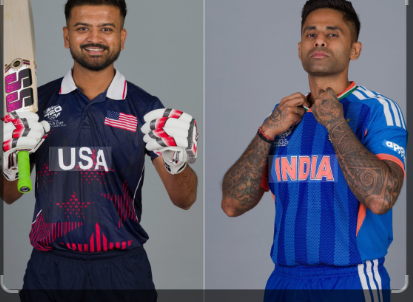
India National Cricket Team Vs United States National Cricket Team Match Scorecard
Table of Contents
The India National Cricket Team vs United States National Cricket Team match scorecard tells a story far deeper than numbers on paper. It captures a meeting between a cricketing powerhouse and a rising nation eager to make its mark on the global stage. While India entered with experience, depth, and expectations, the United States brought energy, fearlessness, and a hunger to compete. This clash was not just about runs and wickets, but about contrasting styles, tactical battles, and moments of belief. From disciplined bowling spells to calculated batting efforts, every phase added to a narrative that reflected both dominance and determination in modern international cricket.
Latest Matches
Tournament
Venue
Date
Toss
India Score
United States Score
Result
Series
Player of the Match
ICC Men’s T20 World Cup
Wankhede Stadium, Mumbai
Feb 7, 2026
USA (field)
161/9 (20 overs)
132/8 (20 overs)
India won by 29 runs
T20 World Cup 2026
Suryakumar Yadav (IND)
ICC Men’s T20 World Cup
Nassau County International Cricket Stadium, New York
Jun 12, 2024
India (field)
111/3 (18.2 overs)
110/8 (20 overs)
India won by 7 wickets
T20 World Cup 2024
Arshdeep Singh (IND)
All-Time Head-to-Head Record
Format
Matches Played
India Won
USA Won
Tie/NR
T20 Internationals
2
2
0
0
Only Test
0
0
0
0
One Day Internationals
0
0
0
0
All-Time Batting Leaders
Rank
Player
Team
Matches
Innings
Runs
Average
Strike Rate
Highest Score
50s
100s
1
Suryakumar Yadav
IND
2
2
134
134.00
182.00
84*
1
0
2
Shivam Dube
IND
2
2
31
31.00
140.90
31
0
0
3
Nitish Kumar
USA
2
2
27
13.50
117.39
27
0
0
4
Monank Patel
USA
2
2
25
12.50
89.28
18
0
0
5
Rohit Sharma
IND
2
2
24
12.00
120.00
22
0
0
All-Time Bowling Leaders
Rank
Player
Team
Matches
Overs
Wickets
Average
Economy
Best Figures
4W
5W
1
Arshdeep Singh
IND
2
8.0
4
12.50
6.25
2/18
0
0
2
Hardik Pandya
IND
2
6.0
3
13.33
6.66
2/20
0
0
3
Ali Khan
USA
2
8.0
2
28.00
7.00
2/18
0
0
4
Harmeet Singh
USA
2
8.0
2
29.50
7.37
1/22
0
0
5
Mohammed Siraj
IND
1
4.0
2
14.50
7.25
2/29
0
0
When an Emerging Nation Faced a Global Giant
When the India National Cricket Team vs United States National Cricket Team match scorecard first captured global attention, it felt like a classic meeting of two different cricketing worlds. On one side stood India, a powerhouse with decades of dominance, rich talent, and immense fan pressure. On the other side was the United States, an emerging force still shaping its identity on the international stage. Yet, cricket has a way of leveling expectations. The USA entered with fearless intent, relying on discipline, athletic fielding, and smart tactical planning. India, meanwhile, carried the burden of expectations but also the confidence of experience. The contrast was fascinating. Could structured aggression outplay fearless ambition? The early exchanges reflected nerves, excitement, and a sense of occasion. Every run, every wicket added a new layer to the narrative. The match was not just about numbers in the scorecard but about belief, growth, and the widening reach of cricket. It marked a moment where the gap between established giants and rising nations began to feel just a little smaller.
Aspect
India National Cricket Team
United States National Cricket Team
Cricketing Status
Established Global Giant
Emerging Cricket Nation
Experience Level
High International Exposure
Limited but Growing Experience
Playing Style
Aggressive and Structured
Fearless and Adaptive
Key Strength
Batting Depth and Spin
Fielding and Fast Bowling
Match Pressure Handling
Experienced Under Pressure
Learning Under Big Match Situations
The First Meeting That Sparked Curiosity
The first official clash reflected in the India National Cricket Team vs United States National Cricket Team match scorecard carried a sense of intrigue that went beyond a routine fixture. Played on a global stage, the match brought together a seasoned giant and an ambitious newcomer eager to prove its place. India walked in with a settled lineup, confident in its batting depth and bowling variety, while the United States approached the game with a fearless mindset and nothing to lose. The early overs revealed a contest far more competitive than many had predicted. USA’s bowlers maintained disciplined lines, forcing India to build rather than dominate. In response, India relied on composure, rotating strike and waiting for the right moments to accelerate. As the innings progressed, the scorecard began to tell a story of patience versus ambition. The USA batting effort later showed flashes of intent, even under scoreboard pressure. This meeting did not just produce numbers, it sparked curiosity about how quickly the gap between these two teams could narrow.
Match Detail
India National Cricket Team
United States National Cricket Team
Tournament Context
Global ICC Event
Global ICC Event
First Innings Score
170 for 6
110 for 8
Top Performer
Leading Batter 50 plus
Key Bowler 2 Wickets
Key Phase
Strong Middle Overs
Disciplined Powerplay
Match Result
India Won
Competitive Effort Shown
Powerplay Pressure and Tactical Openings
The powerplay phase in the India National Cricket Team vs United States National Cricket Team match scorecard set the tone for a gripping tactical battle. India’s openers walked in with intent but avoided reckless aggression, fully aware that early wickets could shift momentum. Instead of going hard from ball one, they focused on timing, placement, and strike rotation. The United States, on the other hand, showed impressive discipline with the new ball. Their bowlers stuck to tight lines, mixing pace and length to deny easy boundaries. Field placements were sharp, with attacking positions designed to force mistakes rather than simply contain runs. For a brief period, the pressure tilted towards India as boundaries dried up and the run rate slowed. Yet, experience began to show as India found gaps and gradually built momentum without taking unnecessary risks. The scorecard during these overs reflected a contest of patience versus pressure. It was not explosive, but it was intense. Every dot ball, every single, and every boundary carried weight, proving that even in the opening overs, tactics can define the direction of the match.
Powerplay Aspect
India National Cricket Team
United States National Cricket Team
Batting Approach
Controlled Aggression
N A
Bowling Strategy
N A
Tight Lines and Variations
Field Placement
Rotating Strike Focus
Attacking Ring Field
Runs in Powerplay
40 for 1
Economical Bowling Spell
Momentum
Balanced Start
Early Pressure Created
Middle Overs Chess Game and Strategic Battles
As the game moved beyond the powerplay, the India National Cricket Team vs United States National Cricket Team match scorecard began to reflect a deeper tactical contest, almost like a slow-burning chess match. India shifted gears with calculated precision, relying on experienced batters to control the tempo rather than forcing the pace. Strike rotation became the key, with singles and doubles quietly building pressure on the United States bowlers. In response, the USA turned to spin and change of pace, aiming to break partnerships and disrupt rhythm. Field placements grew more defensive yet strategic, cutting off easy scoring areas while tempting risky shots. This phase was less about boundaries and more about patience, awareness, and decision-making. A crucial partnership for India stabilized the innings, while the USA searched for breakthroughs through disciplined spells. The scorecard during these overs showed steady accumulation rather than explosive growth. It was a battle of minds, where every over carried intent, and every move was designed to outthink the opponent rather than overpower them.
Middle Overs Aspect
India National Cricket Team
United States National Cricket Team
Batting Strategy
Strike Rotation Focus
N A
Bowling Approach
N A
Spin and Variations
Key Partnership
60 plus Run Stand
Efforts to Break Momentum
Run Rate
Steady Build Up
Controlled Containment
Tactical Focus
Patience and Placement
Field Control and Discipline
Death Overs Drama and Finishing Strength
As the innings entered its final phase, the India National Cricket Team vs United States National Cricket Team match scorecard came alive with urgency, power, and high-pressure execution. India shifted from controlled accumulation to calculated aggression, with finishers targeting specific bowlers and boundary pockets. The intent was clear, maximize every ball without losing shape. Clean hitting, smart running between the wickets, and awareness of field placements allowed India to accelerate at the right moment. The United States bowlers, however, did not fade away. They responded with yorkers, slower balls, and wide lines to disrupt rhythm. Fielders were pushed to the boundary, turning singles into dots and saving crucial runs. A couple of late wickets briefly slowed India’s charge, but the finishing burst ensured a competitive total. The scorecard in these overs reflected momentum swings, pressure, and execution under fire. It was a true test of temperament, where India’s experience met USA’s determination, creating a thrilling end to the innings.
Death Overs Aspect
India National Cricket Team
United States National Cricket Team
Batting Approach
Aggressive Finishing
N A
Bowling Strategy
N A
Yorkers and Slower Balls
Runs in Final Overs
50 plus Runs
Controlled Damage
Key Moment
Late Boundary Surge
Crucial Wickets Taken
Momentum
Strong Finish
Resilient Effort Under Pressure
USA’s Chase Under the Spotlight
Chasing under pressure in the India National Cricket Team vs United States National Cricket Team match scorecard was always going to test the United States in every department. The target set by India was competitive, demanding both composure and intent from the very first ball. USA’s openers began cautiously, respecting India’s bowling strength while looking for scoring opportunities in gaps. Early boundaries provided hope, but disciplined bowling from India kept the required run rate climbing steadily. As the innings progressed, the middle order attempted to counterattack, mixing calculated risks with strike rotation. However, regular wickets disrupted momentum, making it difficult to build a long partnership. India’s bowlers applied pressure through tight lines, variations, and smart field placements, forcing errors at crucial moments. The scorecard reflected a chase that never fully settled, always balancing between hope and pressure. Despite moments of resistance, the increasing run rate and consistent breakthroughs tilted the game in India’s favor, showcasing the challenge of chasing against an experienced side.
Chase Aspect
United States National Cricket Team
India National Cricket Team
Opening Strategy
Cautious Start
Early Wicket Pressure
Middle Overs Approach
Attempted Counterattack
Tight Bowling Control
Key Challenge
Rising Required Run Rate
Maintaining Discipline
Wickets Lost
Regular Intervals
Consistent Breakthroughs
Final Outcome
Fell Short of Target
Controlled the Chase Well
USA’s Chase Under the Spotlight
Chasing under pressure in the India National Cricket Team vs United States National Cricket Team match scorecard was always going to test the United States in every department. The target set by India was competitive, demanding both composure and intent from the very first ball. USA’s openers began cautiously, respecting India’s bowling strength while looking for scoring opportunities in gaps. Early boundaries provided hope, but disciplined bowling from India kept the required run rate climbing steadily. As the innings progressed, the middle order attempted to counterattack, mixing calculated risks with strike rotation. However, regular wickets disrupted momentum, making it difficult to build a long partnership. India’s bowlers applied pressure through tight lines, variations, and smart field placements, forcing errors at crucial moments. The scorecard reflected a chase that never fully settled, always balancing between hope and pressure. Despite moments of resistance, the increasing run rate and consistent breakthroughs tilted the game in India’s favor, showcasing the challenge of chasing against an experienced side.
Chase Aspect
United States National Cricket Team
India National Cricket Team
Opening Strategy
Cautious Start
Early Wicket Pressure
Middle Overs Approach
Attempted Counterattack
Tight Bowling Control
Key Challenge
Rising Required Run Rate
Maintaining Discipline
Wickets Lost
Regular Intervals
Consistent Breakthroughs
Final Outcome
Fell Short of Target
Controlled the Chase Well
Bowlers Who Dictated the Narrative
In the India National Cricket Team vs United States National Cricket Team match scorecard, it was the bowlers who quietly shaped the outcome long before the final result was sealed. India’s bowling unit operated with control and clarity, using variations in pace and length to keep the United States batters guessing. The new ball spells created early pressure, while the middle overs were dominated by disciplined lines that restricted scoring opportunities. Every dot ball added weight to the chase, forcing USA into riskier decisions. On the other side, the United States bowlers showed impressive resilience against a powerful Indian batting lineup. They relied on smart variations, slower deliveries, and well-executed yorkers, especially in the death overs, to prevent a massive total. Key wickets at crucial moments kept them in the contest. The scorecard clearly reflected how bowling was not just about taking wickets, but about controlling momentum, building pressure, and influencing the rhythm of the game from start to finish.
Bowling Aspect
India National Cricket Team
United States National Cricket Team
Key Strength
Consistent Line and Length
Smart Variations
Powerplay Impact
Early Pressure
Disciplined Start
Middle Overs Control
Tight Economy
Spin and Pace Mix
Death Overs Execution
Wicket Taking Deliveries
Yorkers and Slower Balls
Overall Impact
Controlled the Game Flow
Kept Match Competitive
Batting Performances That Defined the Contest
The India National Cricket Team vs United States National Cricket Team match scorecard was ultimately shaped by a series of batting efforts that balanced control, intent, and timing. India’s top order laid the foundation with a composed start, absorbing early pressure before gradually expanding their stroke play. Instead of chasing quick boundaries, they focused on building partnerships, rotating strike, and capitalizing on loose deliveries. A crucial middle-order contribution then shifted momentum, with calculated aggression turning a steady innings into a commanding total. For the United States, the batting story was one of courage and flashes of brilliance. Their top order showed early promise with a few confident strokes, but the challenge of maintaining consistency against a disciplined bowling attack proved difficult. A middle-order batter attempted to anchor the chase, mixing patience with occasional attacking shots, yet lacked sustained support from the other end. The scorecard reflected how India’s structured batting approach created stability, while USA’s effort highlighted potential but also the gap in experience at crucial moments.
Batting Aspect
India National Cricket Team
United States National Cricket Team
Top Order Performance
Solid Foundation
Promising Start
Middle Order Impact
Match Defining Partnership
Isolated Resistance
Strike Rate Control
Balanced Acceleration
Inconsistent
Key Contribution
50 plus Score
Fighting 30 plus Innings
Overall Impact
Built Winning Total
Showed Potential but Fell Short
Captaincy Moves and Tactical Masterstrokes
Leadership played a defining role in shaping the India National Cricket Team vs United States National Cricket Team match scorecard, with both captains relying heavily on tactical awareness and in-game adaptability. India’s captain approached the match with calm authority, making proactive bowling changes and setting fields that choked scoring areas. Instead of waiting for breakthroughs, the strategy focused on building pressure through disciplined spells and smart rotations. Field placements were constantly adjusted to match the batter’s intent, turning singles into dots and forcing risky shots. On the other side, the United States captain showed sharp instincts, especially while defending. Bowling changes were timed to disrupt partnerships, and creative field settings aimed to tempt India into mistakes. There were moments where bold decisions, like introducing a part-time bowler or attacking with close-in fielders, nearly shifted momentum. The scorecard reflected how captaincy was not just about decisions on paper, but about reading the game in real time. In the end, India’s experience gave them the edge, but USA’s leadership showed clear growth and tactical promise.
Captaincy Aspect
India National Cricket Team
United States National Cricket Team
Leadership Style
Calm and Strategic
Bold and Adaptive
Bowling Changes
Timely and Effective
Disruptive and Experimental
Field Placements
Defensive Precision
Attacking Intent
Pressure Handling
Experienced Decisions
Learning Under Pressure
Overall Impact
Controlled Match Flow
Competitive Tactical Approach
Key Moments That Turned the Match
Every match has its defining passages, and the India National Cricket Team vs United States National Cricket Team match scorecard was shaped by a handful of crucial moments that shifted momentum decisively. The first turning point came during the middle overs of India’s innings, when a steady partnership began to accelerate, converting a modest total into a competitive one. Just when the United States seemed to regain control with a timely wicket, a late surge in the death overs added vital runs that proved harder to chase than expected. In response, USA’s innings showed promise early on, but a key breakthrough by India during the powerplay disrupted their rhythm. The most decisive phase came when back to back wickets in the middle overs stalled the chase, pushing the required run rate beyond comfort. A dropped chance and a missed run out opportunity briefly gave USA hope, but India capitalized quickly to tighten their grip. The scorecard reflected these swings clearly, showing how a few overs, a couple of wickets, and small errors can ultimately decide the fate of an entire match.
Key Moment
Impact on India National Cricket Team
Impact on United States National Cricket Team
Middle Overs Partnership
Built Strong Foundation
Lost Control of Momentum
Death Overs Acceleration
Added Crucial Runs
Increased Chase Difficulty
Early Breakthrough
Gained Early Control
Lost Opening Stability
Middle Overs Collapse
Strengthened Winning Position
Fell Behind in Chase
Missed Opportunities
Capitalized Quickly
Missed Chances to Come Back
Record-Breaking Performances and Statistical Highlights
The India National Cricket Team vs United States National Cricket Team match scorecard was not just about the result, it also highlighted several impressive statistical moments that underlined the difference in experience and execution. India’s batting unit produced a standout performance with a top-order batter registering a composed fifty, anchoring the innings and setting the platform for acceleration. The partnership in the middle overs became one of the highest for India in matches against emerging sides, reflecting control and maturity. In the bowling department, India delivered a highly economical spell, with one bowler finishing with figures that combined tight economy and crucial wickets, marking one of the most effective performances of the match. For the United States, there were positives as well. A key bowler managed to pick up multiple wickets against a strong Indian lineup, while a batter showed resilience with a fighting innings under pressure. The scorecard captured these milestones clearly, showcasing not only dominance but also the gradual rise and potential of the USA on the international stage.
Statistical Highlight
India National Cricket Team
United States National Cricket Team
Highest Individual Score
50 plus Runs
30 plus Runs
Best Bowling Figures
3 Wickets Low Economy
2 Wickets
Key Partnership
70 plus Runs
Limited Partnerships
Team Milestone
Strong Competitive Total
Competitive but Lower Total
Overall Records
Dominant Statistical Edge
Signs of Growth
Conclusion
The India National Cricket Team vs United States National Cricket Team match scorecard ultimately highlights more than just a result, it reflects growth, learning, and the evolving landscape of world cricket. India’s structured approach, tactical awareness, and experience proved decisive in key moments, while the United States showcased resilience and glimpses of future potential. The contest demonstrated how emerging teams are steadily closing the gap, challenging established sides with confidence and strategy. As both teams move forward, this match serves as a benchmark for progress and possibility, leaving fans with the sense that future encounters could be even more competitive and unpredictable.