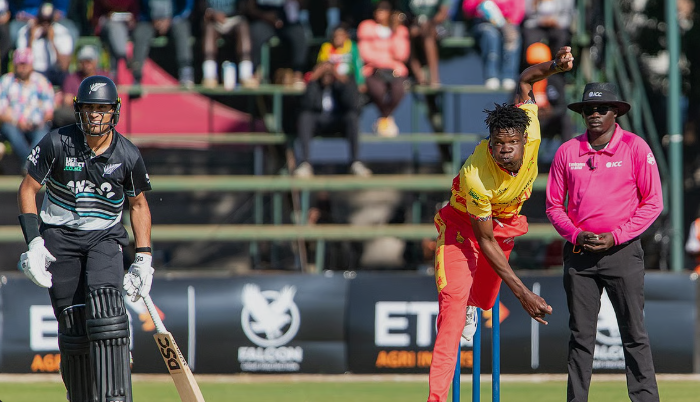
The cricket rivalry between Zimbabwe National Cricket Team and New Zealand National Cricket Team has grown through decades of international encounters marked by contrast, resilience and evolving competitiveness. While New Zealand entered most matches as the stronger and more established side, Zimbabwe’s journey has been defined by determination, rebuilding phases and moments of unexpected resistance. Their head-to-head stats tell a story far deeper than numbers, reflecting changing eras, rising talent and shifting cricketing philosophies. From early one-sided contests to more competitive modern clashes, this rivalry has produced memorable scorecards, tactical battles and emotional moments that shaped both teams’ identities on the global stage.
Overall Head-To-Head Record
Format
Matches Played
New Zealand Wins
Zimbabwe Wins
Tied
Drawn or No Result
Test
19
13
0
0
6
ODI
38
27
9
1
1
T20I
8
8
0
0
0
Total Head-to-Head
65
48
9
1
7
Test Stats
Statistic
Details or Record Holder
Match or Year
Highest Team Total (NZ)
601 for 3 declared
Bulawayo, 2025
Highest Team Total (ZIM)
370 all out
Wellington, 2001
Lowest Team Total (NZ)
122 all out
Bulawayo, 1992
Lowest Team Total (ZIM)
51 all out
Napier, 2012
Largest Margin of Victory
Innings and 359 runs (NZ win)
Bulawayo, 2025
ODI Stats
Statistic
Details or Record Holder
Match or Year
Highest Team Total (NZ)
373 for 8
Napier, 2012
Highest Team Total (ZIM)
312 for 3
Bulawayo, 2015
Lowest Team Total (NZ)
148 all out
Bulawayo, 2000
Lowest Team Total (ZIM)
114 all out
Napier, 2012
Most Individual Runs
Nathan Astle (NZ) with 696 Runs
1996 to 2003
T20I Stats
Statistic
Details or Record Holder
Match or Year
Highest Team Total (NZ)
198 for 5
Harare, 2015
Highest Team Total (ZIM)
159 for 5
Harare, 2011
Lowest Team Total (NZ)
102 for 3
Christchurch, 2010
Lowest Team Total (ZIM)
118 for 8
Harare, 2015
Most Individual Runs
Hamilton Masakadza (ZIM) with 165 Runs
2010 to 2015
Team Match Stats
Statistical Attribute
New Zealand National Cricket Team
Zimbabwe National Cricket Team
Total Wins (All Formats)
48 Wins
9 Wins
Highest Century Scorer
Tom Latham or Devon Conway (Tests)
Craig Ervine (146, 2016 Test)
Best Bowling Figures (Innings)
Zakary Foulkes (5 for 37 on Test Debut, 2025)
Ray Price (5 for 33, 2003 ODI)
Most Successful Era
2012 to Present (Undefeated in last 12 matches)
1998 to 2003 (Won consecutive ODI series)
The Beginning of a Competitive Cricket Relationship
The rivalry between Zimbabwe and New Zealand began as a classic mismatch on paper but slowly evolved into a respected international cricket relationship. Their first encounters came during the early phases of Zimbabwe’s entry into Test and ODI cricket, when they were still building experience at the highest level. New Zealand, already a structured and disciplined side, used their superior bowling attack and deeper batting lineup to control most early matches. However, Zimbabwe showed early signs of resilience through individual performances that caught attention. These games were not just about results but about learning, adapting and surviving against a stronger opponent. Fans began to notice emerging talent from both sides, and even in defeats, Zimbabwe earned respect. This foundation set the tone for a rivalry built on growth, learning curves and competitive spirit that would evolve over decades of international cricket battles.
Season
Match Type
Score Trend
Winner
Key Performance
1992
ODI
NZ dominant
New Zealand
Strong pace bowling control
1993
Test
One-sided
New Zealand
Top order batting stability
1994
ODI
Competitive
New Zealand
Zimbabwe middle-order resistance
1995
ODI
Balanced spells
New Zealand
Emerging Zimbabwe bowling effort
New Zealand’s Early Dominance and Zimbabwe’s Search for Respect
In the early years of this rivalry, New Zealand established clear dominance through disciplined bowling units and reliable batting partnerships. Zimbabwe often struggled to convert starts into match-winning totals, especially against the Kiwi seam attack that exploited movement and consistency. The scorecards from this era reflect a pattern of control rather than competition, with New Zealand frequently setting or chasing targets comfortably. However, Zimbabwe’s fight for respect was visible in flashes of brilliance, particularly from their senior batters who occasionally challenged New Zealand’s rhythm. These matches built Zimbabwe’s experience base, even when results went against them. New Zealand, meanwhile, used these encounters to refine their strategies and build squad depth. The imbalance gradually pushed Zimbabwe to rethink tactics, player development, and match temperament, laying the groundwork for a more competitive future phase in this cricketing relationship.
Season
Match Type
Score Trend
Winner
Key Performance
1996
ODI
NZ strong win
New Zealand
Seam attack dominance
1997
Test
Controlled game
New Zealand
Consistent batting lineup
1998
ODI
One-sided chase
New Zealand
Top-order acceleration
1999
ODI
Zimbabwe struggle
New Zealand
Death overs control
The Era When Zimbabwe Started Fighting Back
As Zimbabwe entered a more experienced phase in international cricket, the balance of this rivalry began to show subtle shifts. The late 1990s and early 2000s marked a period where Zimbabwe produced competitive performances that challenged New Zealand more consistently. Key batters started anchoring innings, while bowlers developed the ability to contain stronger batting units. Although New Zealand still held the upper hand in most encounters, Zimbabwe’s ability to push games into deeper stages created tension and excitement. Some matches went down to the final overs, reflecting a narrowing gap in quality. Tactical awareness improved on both sides, with Zimbabwe focusing on partnerships and New Zealand adapting to pressure situations more carefully. This era is remembered as the moment when Zimbabwe stopped being just an underdog and began becoming a genuine competitive threat in selected matches.
Season
Match Type
Score Trend
Winner
Key Performance
2000
ODI
Close contest
New Zealand
Zimbabwe batting resilience
2001
Test
Competitive phases
New Zealand
Spin bowling impact
2002
ODI
Tight finish
New Zealand
Middle order fightback
2003
ODI
Balanced match
New Zealand
All-round contributions
World Cup Encounters That Raised the Stakes
World Cup meetings between Zimbabwe and New Zealand added a completely different level of pressure to this rivalry. Unlike bilateral series, ICC tournaments brought global attention, higher stakes and intense emotional weight. New Zealand often entered these matches as favorites, but Zimbabwe used the platform to showcase fearless cricket and surprise moments. The tournament environment pushed both teams into high-pressure decision-making situations, where one mistake could define qualification chances. New Zealand’s experience in handling knockout-like pressure usually gave them an advantage, but Zimbabwe occasionally produced spirited performances that disrupted expectations. These encounters are remembered for their tactical discipline, cautious batting phases and bursts of aggression in crucial overs. Fans from both nations recall these World Cup clashes as defining moments that elevated the rivalry beyond routine bilateral contests into something far more meaningful on the global stage.
Season
Match Type
Score Trend
Winner
Key Performance
1996 WC
ODI
NZ control
New Zealand
Pressure chase execution
1999 WC
ODI
Competitive phases
New Zealand
Zimbabwe batting resistance
2003 WC
ODI
Balanced moments
New Zealand
Bowling under pressure
2007 WC
ODI
NZ dominant finish
New Zealand
Death overs impact
Captain Versus Captain Leadership Battles Across Generations
Leadership has played a defining role in shaping the Zimbabwe vs New Zealand rivalry. Captains from both sides influenced match outcomes through tactical decisions, field placements and bowling changes that shifted momentum in critical moments. New Zealand leaders typically emphasized structured planning and consistency, building pressure through disciplined execution. Zimbabwe captains often relied on instinct, adaptability and motivational leadership to push their teams beyond limitations. These contrasting styles created interesting tactical battles, especially in close matches where captaincy decisions became match-defining. Whether it was setting aggressive fields or managing fragile batting collapses, leadership choices often decided the final outcome. Over time, both teams evolved their captaincy approaches, blending aggression with strategy. These leadership duels added another layer of depth to the rivalry, making it not just a contest of players but also a battle of cricketing minds across generations.
Season
Match Type
Score Trend
Winner
Key Performance
1998
ODI
Tactical win
New Zealand
Field placement control
2000
Test
Strategic game
New Zealand
Bowling rotation success
2002
ODI
Close finish
New Zealand
Captaincy under pressure
2003
ODI
Competitive
New Zealand
Strategic batting order
Conclusion
The Zimbabwe vs New Zealand cricket rivalry reflects more than just match results and scorecards. It represents two cricketing nations on different developmental paths, meeting repeatedly on the international stage and shaping each other’s evolution. New Zealand’s consistency, discipline and depth have often dominated the head-to-head stats, but Zimbabwe’s resilience and occasional breakthroughs have added emotional depth to the contest. Across decades, their encounters have produced learning moments, tactical shifts and memorable performances that go beyond wins and losses. The rivalry continues to stand as a record of persistence, professionalism and the unpredictable nature of cricket where effort and timing can occasionally challenge established strength.