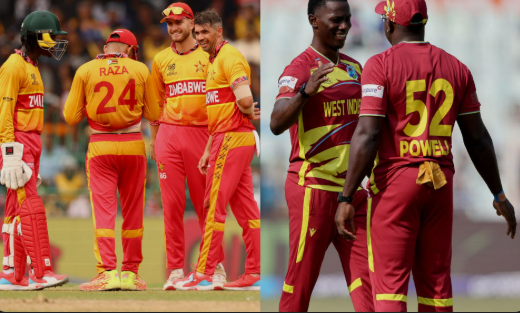
The rivalry between the England Cricket Team and the West Indies Cricket Team is one of cricket’s most compelling stories, shaped by history, pride, and changing power dynamics. What began as a one-sided contest in the early years soon transformed into a fierce battle marked by dominance, resistance, and unforgettable performances. From classic Test encounters to high-pressure limited-overs clashes, every match added a new chapter to this timeline. Scorecards tell only part of the story, while emotions, aggression, and iconic player battles bring it to life. This rivalry reflects not just cricketing excellence but also evolution, identity, and the spirit of competition.
Latest Matches
Tournament
Venue
Date
Toss
England Score
West Indies Score
Result
Series
Player of the Match
Men’s T20 World Cup
Mumbai
Feb 11, 2026
ENG (field)
166 (19 overs)
196/6 (20 overs)
West Indies won by 30 runs
T20 World Cup
Sherfane Rutherford (WI)
Bilateral T20I
Southampton
Jun 10, 2025
WI (field)
248/3 (20 overs)
211/8 (20 overs)
England won by 37 runs
Bilateral T20I
Ben Duckett (ENG)
Bilateral T20I
Bristol
Jun 8, 2025
ENG (field)
199/6 (18.3 overs)
196/6 (20 overs)
England won by 4 wickets
Bilateral T20I
Luke Wood (ENG)
Bilateral T20I
Chester-le-Street
Jun 6, 2025
ENG (bat)
188/6 (20 overs)
167/9 (20 overs)
England won by 21 runs
Bilateral T20I
Liam Dawson (ENG)
Bilateral ODI
London
Jun 3, 2025
ENG (field)
246/3 (29.4 overs)
251/9 (40 overs)
England won by 7 wkts (DLS)
Bilateral ODI
Jamie Smith (ENG)
Bilateral ODI
Cardiff
Jun 1, 2025
ENG (field)
312/7 (48.5 overs)
308 (47.4 overs)
England won by 3 wickets
Bilateral ODI
Joe Root (ENG)
Bilateral ODI
Birmingham
May 29, 2025
WI (field)
400/8 (50 overs)
162 (26.2 overs)
England won by 238 runs
Bilateral ODI
Jacob Bethell (ENG)
All-Time Head-to-Head Record
Format
Total Matches
England Wins
West Indies Wins
Drawn/No Result
Test Matches
163
54
59
50
ODI Matches
111
55
48
8
T20 Internationals
39
19
19
1
All-Time Batting Leaders
Player
Team
Span
Format Focus
Key Milestone
Garry Sobers
WI
1954–1974
Test
3,214 Test runs vs England
Brian Lara
WI
1990–2004
Test
World record 400* in 2004
Shiv Chanderpaul
WI
1994–2015
All
High consistency across formats
Joe Root
ENG
2012–Present
All
Leading modern run-getter for ENG
Phil Salt
ENG
2021–Present
T20I
640 runs at a 180 strike rate
All-Time Bowling Leaders
Player
Team
Span
Wickets
Best Figures
Curtly Ambrose
WI
1988–2000
164 (Test)
8/45
Courtney Walsh
WI
1984–2001
145 (Test)
5/1 (ODI)
Malcolm Marshall
WI
1978–1991
127 (Test)
7/22
Adil Rashid
ENG
2009–Present
42 (T20I)
World record for T20I wickets vs WI
James Anderson
ENG
2003–2024
87 (Test)
Leading ENG Test wicket-taker vs WI
When It All Began: The First Clash That Sparked a Legacy
The rivalry between the England Cricket Team and the West Indies Cricket Team began in 1928 at Lord’s Cricket Ground, a venue often called the home of cricket. At that time, England entered the contest as a dominant force, backed by experience and deep domestic structure, while West Indies were newcomers still learning the demands of Test cricket. The match reflected this imbalance clearly. England’s batting lineup showed patience and technical control, posting a commanding total, while their bowlers exploited conditions with discipline. West Indies, however, despite struggling against swing and seam, displayed moments of natural flair and attacking stroke play that hinted at their future identity. Though England secured a comfortable win according to the scorecard, the real story lay beneath the numbers. This was not just a match but the beginning of a journey. It planted the seed of a rivalry that would grow from one-sided contests into one of cricket’s most exciting and emotionally charged battles, driven by pride, evolution, and a hunger to challenge the old order.
Match
Year
Venue
Result
Key Performers
1st Test
1928
Lord’s, London
England won
England top-order dominated
2nd Test
1928
Manchester
England won
Strong English bowling attack
3rd Test
1928
The Oval
England won
Consistent batting display
Series Result
1928
England
England 3-0
West Indies gained experience
Learning the Game: West Indies Finding Its Feet Against England
In the years following their debut series, the West Indies Cricket Team slowly began to understand what it took to compete with the seasoned England Cricket Team. Tours in the 1930s were not just about results but about learning discipline, adapting to foreign conditions, and building confidence. English pitches, especially at venues like The Oval, tested technique and patience, something the Caribbean side initially struggled with. Yet, within these tough encounters, signs of growth were evident. Players like George Headley emerged as beacons of hope, producing remarkable batting performances against quality bowling attacks. His consistency gave West Indies belief that they could stand toe-to-toe with England. Gradually, their bowlers also improved, learning to use seam and swing rather than relying solely on pace. While England still held the upper hand in most scorecards, the margins began to shrink. These matches were crucial in shaping West Indies’ cricketing identity. They were no longer just participants but competitors in the making, laying the foundation for a future where they would not only challenge England but eventually dominate them.
Match
Year
Venue
Result
Key Performers
Test Match
1933
The Oval, London
Draw
George Headley century
Test Match
1934
Manchester
England won
Strong English bowling
Test Match
1935
Kingston
West Indies competitive
Headley standout
Series Result
1930s
Various
England led
West Indies improving steadily
A Shift in Belief: West Indies Rise from Underdogs to Challengers
By the late 1940s and early 1950s, the West Indies Cricket Team were no longer content with learning. They had started believing. Tours to England carried a new sense of purpose, and the famous 1950 series became a turning point that changed the narrative forever. At iconic venues like Lord’s Cricket Ground, West Indies showcased a blend of flair and discipline that England had not fully anticipated. The emergence of players such as Everton Weekes and Clyde Walcott brought solidity to the batting order, while the spin duo of Sonny Ramadhin and Alf Valentine dismantled England’s batting with skill and mystery. England, who had long dictated terms, suddenly found themselves under pressure, struggling to adapt. The scorecards told a new story, one where West Indies were not just competing but winning convincingly. Their historic series victory in England marked a psychological breakthrough. It was the moment the underdogs shed their tag and stepped into the role of genuine challengers, driven by confidence, unity, and a growing hunger to dominate world cricket.
Match
Year
Venue
Result
Key Performers
1st Test
1950
Lord’s, London
West Indies won
Ramadhin, Valentine brilliance
2nd Test
1950
Manchester
Draw
Strong batting from both sides
3rd Test
1950
Trent Bridge
West Indies won
Weekes and Walcott impact
4th Test
1950
Leeds
Draw
Balanced contest
Series Result
1950
England
West Indies 3-1
Historic series victory
The Birth of Dominance: West Indies Take Control in the 1970s
The 1970s marked the moment when the West Indies Cricket Team transformed from confident challengers into an unstoppable force against the England Cricket Team. Under the powerful leadership of Clive Lloyd, the Caribbean side reshaped its identity with a fearless approach built on aggressive batting and a revolutionary pace attack. England, once dominant, suddenly found themselves under relentless pressure. Fast bowlers like Andy Roberts began to expose weaknesses in England’s batting, while the arrival of Viv Richards added a new level of intimidation with the bat. Matches were no longer gentle contests but fierce battles where West Indies dictated terms from the first ball. The scorecards from this era consistently reflected dominance, with England struggling to counter both pace and aggression. The 1976 series, in particular, became symbolic of this shift, as West Indies overwhelmed England with confidence and skill. This was more than just winning matches. It was a statement of power. The West Indies had arrived as the most feared team in world cricket, and England were now chasing shadows in a rivalry that had completely changed direction.
Match
Year
Venue
Result
Key Performers
Test Match
1973
England
West Indies competitive
Early signs of pace strength
Test Match
1974
West Indies
West Indies won
Clive Lloyd leadership
Test Match
1976
The Oval
West Indies won
Viv Richards dominant innings
Test Match
1976
Manchester
West Indies won
Andy Roberts pace attack
Series Result
1976
England
West Indies dominant
Beginning of an era
Pace, Power and Fear: The Fast Bowling Revolution
The rivalry between the West Indies Cricket Team and the England Cricket Team reached its most intimidating phase when West Indies unleashed a fearsome fast bowling revolution. During the late 1970s and 1980s, their strategy shifted completely toward raw pace, accuracy, and relentless pressure. Bowlers like Michael Holding, Malcolm Marshall, Joel Garner, and Colin Croft formed a deadly quartet that changed the nature of Test cricket. England’s batsmen were constantly under threat, facing short-pitched deliveries at high speed, often with minimal protective gear compared to modern standards. Matches became psychological battles as much as physical contests. The scorecards frequently showed England collapsing under pressure, unable to withstand sustained aggression. This approach not only brought victories but also instilled fear, making West Indies the most dominant team of the era. For England, it was a period of survival and adaptation. For West Indies, it was complete control. This fast bowling revolution didn’t just win matches, it redefined the rivalry and left a lasting mark on cricket history.
Match
Year
Venue
Result
Key Performers
Test Match
1976
The Oval
West Indies won
Holding devastating spell
Test Match
1980
Lord’s
West Indies won
Garner and Croft impact
Test Match
1984
Headingley
West Indies won
Marshall dominant bowling
Test Match
1985
Manchester
West Indies won
Complete pace attack control
Series Result
1980s
England
West Indies dominant
Era of fast bowling supremacy
Icons Collide: Individual Rivalries That Defined an Era
As the rivalry between the England Cricket Team and the West Indies Cricket Team intensified, it was the battles between iconic players that truly captured the imagination of fans. This was not just team versus team, but superstar versus superstar. Viv Richards stood at the center of it all, dominating England’s bowling with fearless stroke play and unmatched confidence. His confrontations with England’s bowlers became legendary, often turning matches single-handedly. On the other side, Ian Botham embodied England’s resistance, delivering match-winning performances with both bat and ball. Their presence brought intensity, pride, and personal stakes into every encounter. Later, players like Gordon Greenidge and Desmond Haynes added stability at the top, while England relied on determined efforts from their core lineup. Each scorecard told stories of personal duels, whether it was a batsman conquering a bowler or a spell that turned the tide. These individual rivalries added layers to the contest, making every match more than just a result. They turned the England versus West Indies timeline into a stage where legends were made and remembered for generations.
Match
Year
Venue
Result
Key Player Battles
Test Match
1976
The Oval
West Indies won
Viv Richards vs England attack
Test Match
1981
Headingley
England won
Ian Botham heroics
Test Match
1984
Lord’s
West Indies won
Greenidge dominance
Test Match
1985
Leeds
West Indies won
Haynes consistency
Series Result
1980s
Various
West Indies led
Iconic player rivalries
Conclusion
Over decades, the journey of the England Cricket Team vs the West Indies Cricket Team rivalry has seen dramatic shifts in control, unforgettable matches, and legendary players leaving their mark. From England’s early dominance to West Indies’ era of supremacy and the modern balance between the sides, every phase has contributed to its rich legacy. The scorecards highlight performances, but the real essence lies in the passion, pressure, and pride that define each encounter. As new players emerge and formats evolve, this historic rivalry continues to grow, promising more thrilling contests and memorable moments for cricket fans around the world.